Digital Movements, Political Frustration, and the Limits of Online Protest
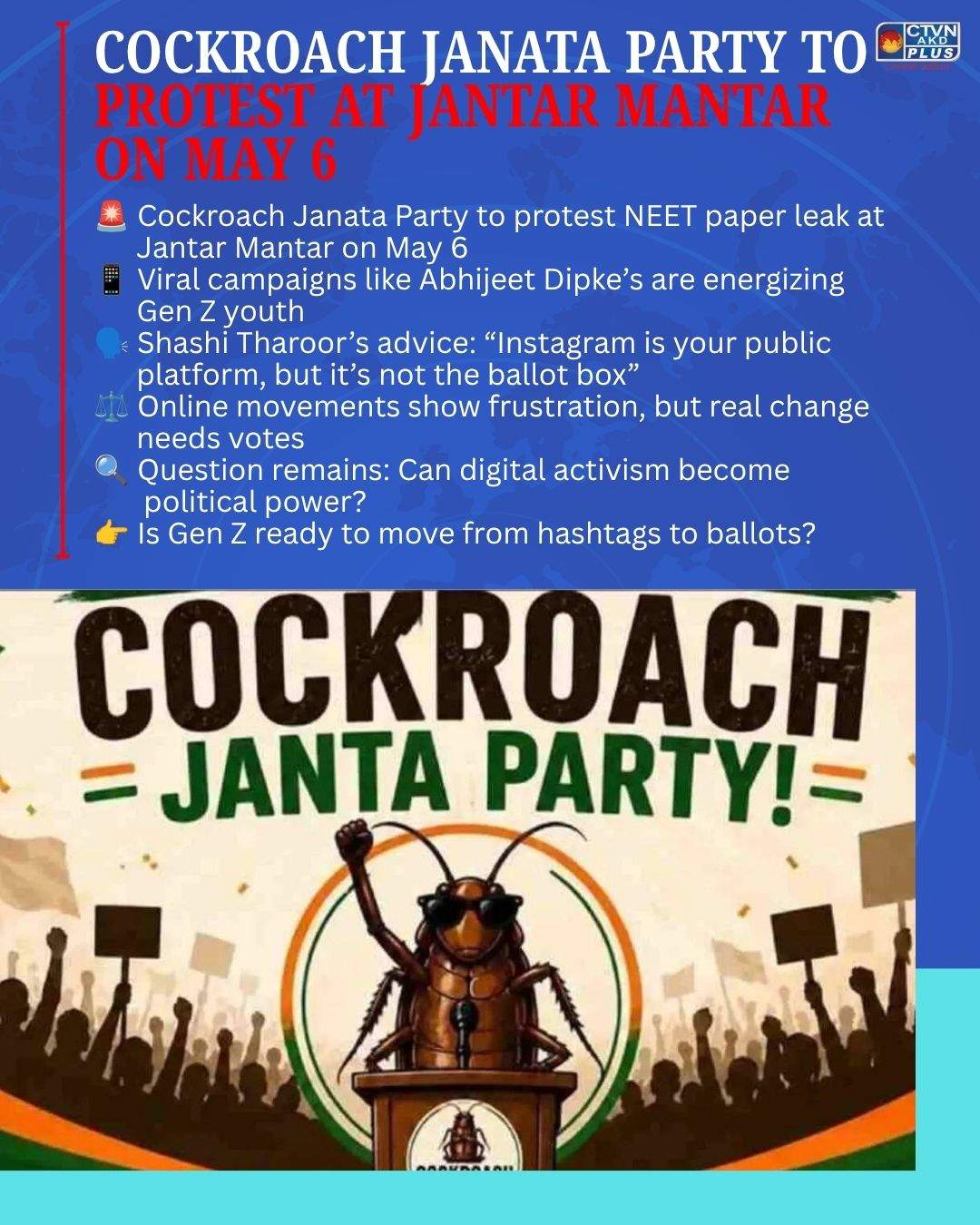
The rise of the Cockroach Janata Party as a viral online movement reflects the growing disillusionment of India’s youth with the political system. Sparked by the Supreme Court’s statement and amplified by the NEET paper leak controversy, the group has chosen Jantar Mantar as the stage for its protest on May 6. This convergence of digital activism and street demonstration highlights the generational frustration with corruption, lack of accountability, and systemic failures.
Congress MP Shashi Tharoor’s intervention adds a crucial dimension to this debate. Addressing Gen Z, he acknowledged the energy and creativity of youth campaigns like Abhijeet Dipke’s, which have captured the imagination of young Indians. Yet, Tharoor’s advice was a sober reminder: “Instagram is your public platform, but it’s not the ballot box.” His words underline the gap between online visibility and real political change.
The essay raises a critical question: Can viral movements translate into electoral power? While social media provides visibility, it cannot substitute the institutional weight of voting. For Gen Z, the challenge lies in bridging the digital enthusiasm with civic participation. Without this, movements risk remaining symbolic rather than transformative.