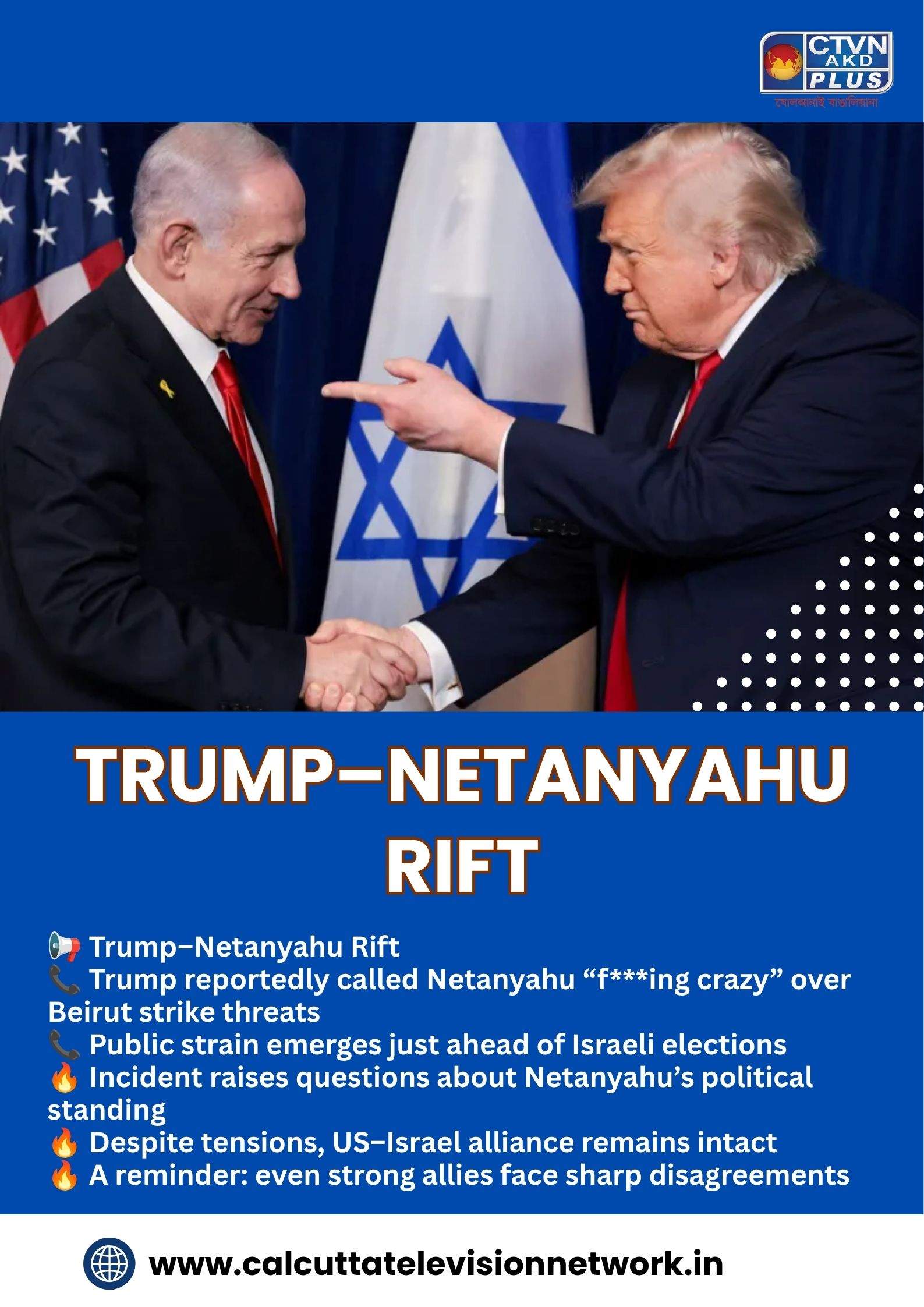
Trump–Netanyahu Rift Exposes Strains Amid Israeli Elections
A recent heated phone call between US President Donald Trump and Israeli Prime Minister Benjamin Netanyahu has laid bare the tensions within their alliance. Reports suggest that Trump, angered by Israeli threats to strike Beirut, called Netanyahu “f***ing crazy.” This blunt exchange highlights the growing strain between Washington and Jerusalem, even as both leaders continue to describe each other as allies.
The timing of this incident is politically sensitive for Netanyahu, who faces upcoming Israeli elections. Public disagreements with the United States, Israel’s most important strategic partner, could weaken his standing domestically. While Netanyahu has often projected strength in foreign policy, Trump’s sharp rebuke underscores the limits of unilateral military threats when they risk destabilizing regional security.
Despite these frictions, the US–Israel relationship remains resilient. Both leaders share common goals on security and regional strategy, but the episode illustrates how personal dynamics and political calculations can complicate alliances. For Netanyahu, the challenge lies in balancing his domestic political narrative with the need to maintain credibility abroad. For Trump, the exchange signals his willingness to confront even close allies when their actions threaten broader US interests.
Ultimately, the phone call reflects the reality of modern geopolitics: alliances endure, but they are not immune to public strain, especially when national elections and regional conflicts intersect.
#Trump #Netanyahu #IsraelElections #USIsraelRelations