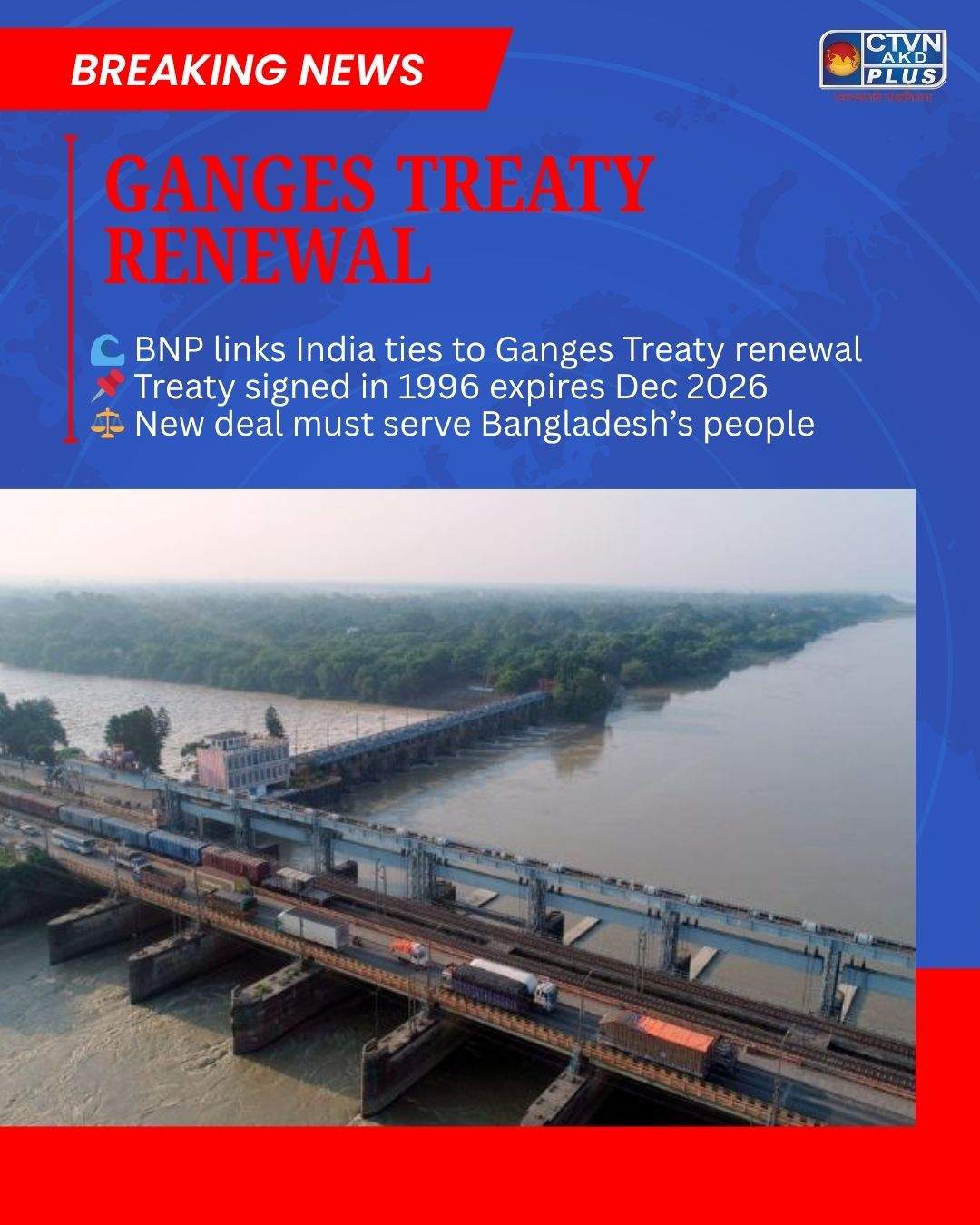
BNP Ties India Relations to Ganges Treaty Renewal
Bangladesh’s ruling Bangladesh Nationalist Party (BNP) has signaled that the future of its relationship with India will hinge on the renewal of the Ganges Water Sharing Treaty, set to expire in December 2026. BNP Secretary General and Minister Mirza Fakhrul Islam Alamgir emphasized that any new agreement must prioritize the interests of the Bangladeshi people.
The treaty, originally signed in 1996 under Sheikh Hasina’s government, was a landmark accord that regulated dry-season water flows from the Ganges into Bangladesh. With its expiry approaching, Dhaka faces a critical juncture in balancing domestic water needs with regional diplomacy.
Alamgir’s remarks underscore BNP’s determination to frame water-sharing as a national interest issue rather than a purely diplomatic gesture. Rising concerns over irrigation, agriculture, and climate pressures have made river management central to Bangladesh’s economic and social stability.
Analysts note that BNP’s stance could reshape bilateral ties with India. By linking cooperation to treaty renewal, Dhaka is signaling that water security is non-negotiable. The move also reflects broader regional anxieties, as transboundary rivers remain a sensitive issue across South Asia.
For Bangladesh, the Ganges treaty renewal is not only about hydrology but about sovereignty, development, and trust. As December approaches, negotiations will test whether India and Bangladesh can find common ground to sustain cooperation in an era of heightened geopolitical competition.
#BNP #IndiaBangladesh #GangesTreaty