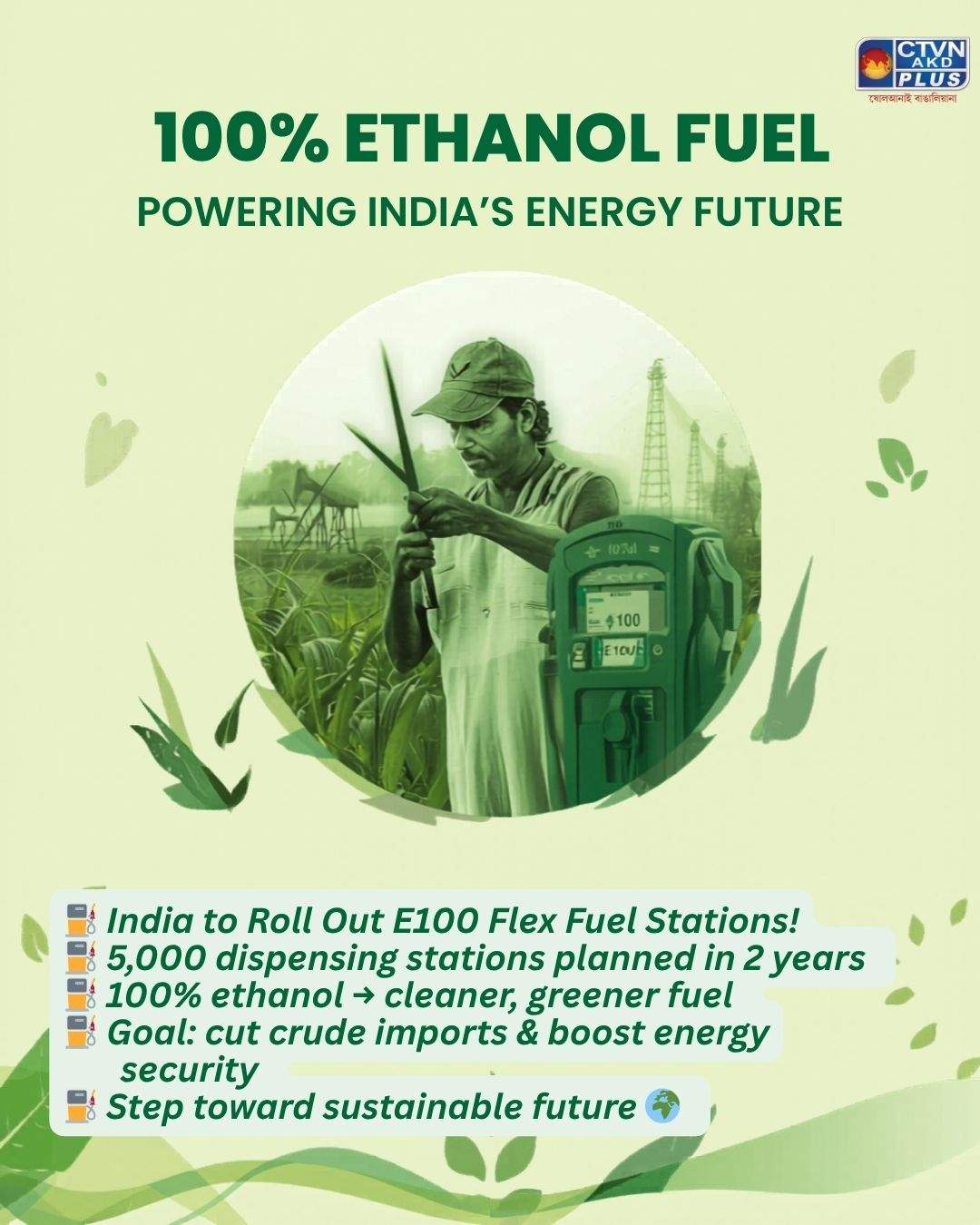
India Fast-Tracks E100 Flex Fuel to Cut Crude Imports
The Government of India is moving swiftly to expand the availability of E100 flex fuel — 100% ethanol — as part of its strategy to reduce dependence on imported crude oil. According to people familiar with the development, the Centre plans to establish 5,000 dispensing stations across the country within the next two years.
Ethanol, derived primarily from sugarcane and other biomass, has long been promoted as a cleaner alternative to petrol. Flex fuel technology allows vehicles to run on varying blends of ethanol and petrol, with E100 representing the highest level of substitution. By scaling up infrastructure for pure ethanol dispensing, India aims to accelerate adoption of biofuels, cut its import bill, and strengthen energy security.
The initiative also aligns with India’s broader climate commitments. Ethanol burns cleaner than conventional fuels, reducing carbon emissions and improving air quality. Expanding E100 availability could therefore contribute to both economic and environmental goals.
Experts note that the success of this program will depend on multiple factors: ensuring adequate ethanol production capacity, maintaining stable supply chains, and encouraging automobile manufacturers to support flex-fuel engines. The government has already signaled its intent to work closely with industry stakeholders to overcome these challenges.
If implemented effectively, the rollout of 5,000 E100 stations could mark a turning point in India’s energy transition. It would not only reduce reliance on volatile global oil markets but also showcase India’s commitment to indigenous, sustainable fuel solutions.
#Ethanol #FlexFuel #EnergySecurity #IndiaTransition