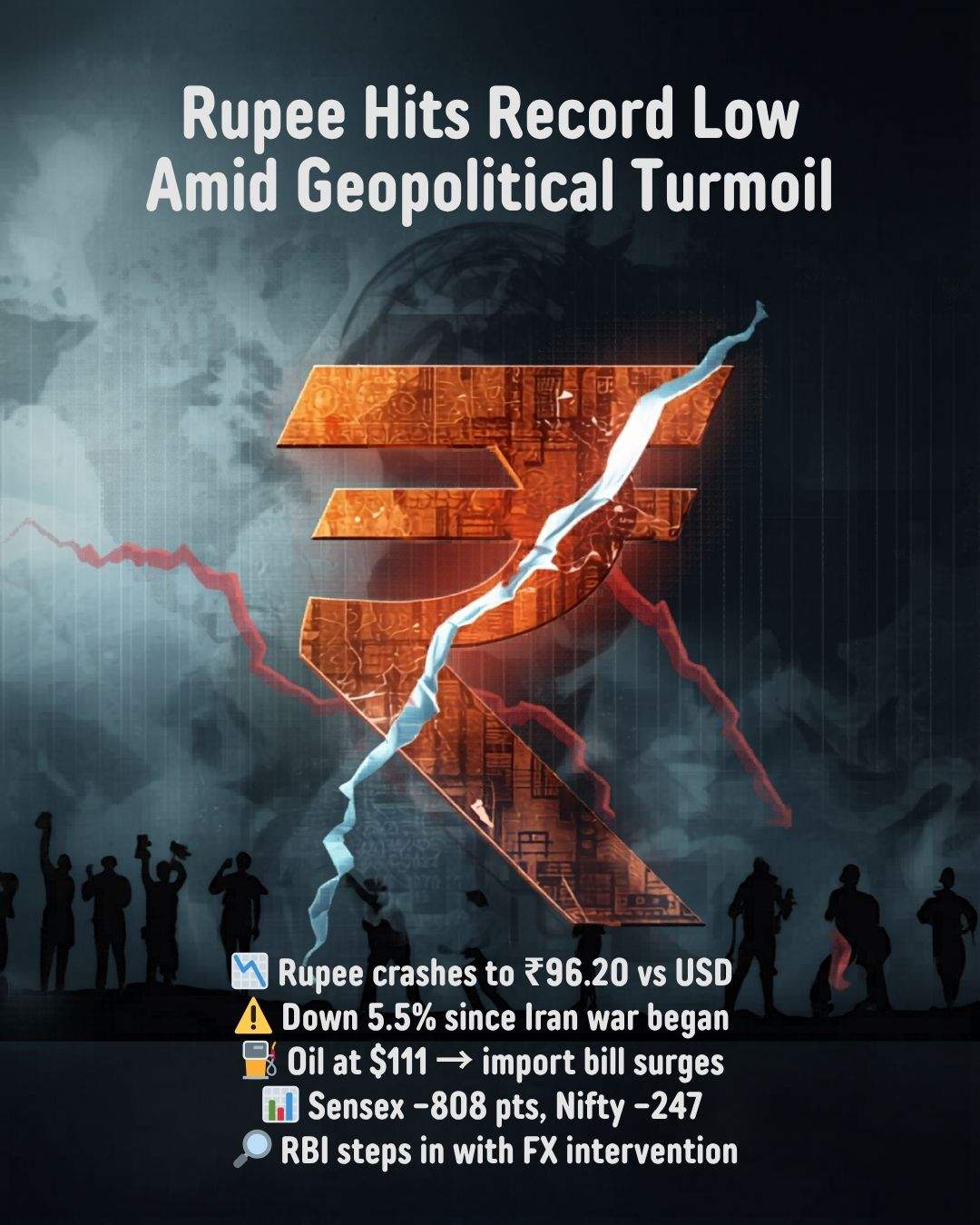
Rupee Hits Record Low Amid Geopolitical Turmoil
India’s currency markets faced renewed stress on Monday as the rupee plunged to a fresh all-time low of 96.20 against the US dollar, slipping 0.2% from its previous close. Since the outbreak of the Iran war, the rupee has weakened by 5.5%, highlighting the vulnerability of India’s external position.
The sharp depreciation is driven by surging crude oil prices. Brent crude climbed to USD 111 per barrel after reports of an attack on a UAE nuclear facility, raising fears of supply disruptions. Rising oil costs have widened India’s trade deficit and increased import bills, while muted capital inflows have left the economy exposed to external shocks.
Market experts warn that the rupee’s weakness signals deeper macroeconomic concerns. Ponmudi R of Enrich Money noted that strong global dollar demand and energy-driven pressures have unsettled investor sentiment, raising worries about inflation and growth slowdown.
Equity markets mirrored the nervousness, with Sensex falling 808 points to 74,430 and Nifty50 slipping 247 points to 23,396. Selling was broad-based across banking, auto, and metals, while volatility spiked as India VIX hovered near 20.
Authorities have rolled out measures to stem the slide. The Reserve Bank of India intervened in currency markets and tightened rules on banks’ net open positions. Import restrictions on silver were imposed after tariffs on precious metals were lifted. Economists at JP Morgan highlighted that India’s balance of payments pressures will need to be managed through rupee depreciation, FX intervention, and incentivising capital flows.
Currency traders expect depreciation pressures to persist, with RBI’s actions determining whether losses remain gradual or accelerate sharply.
#Rupee #USD #OilPrices #MarketCrash