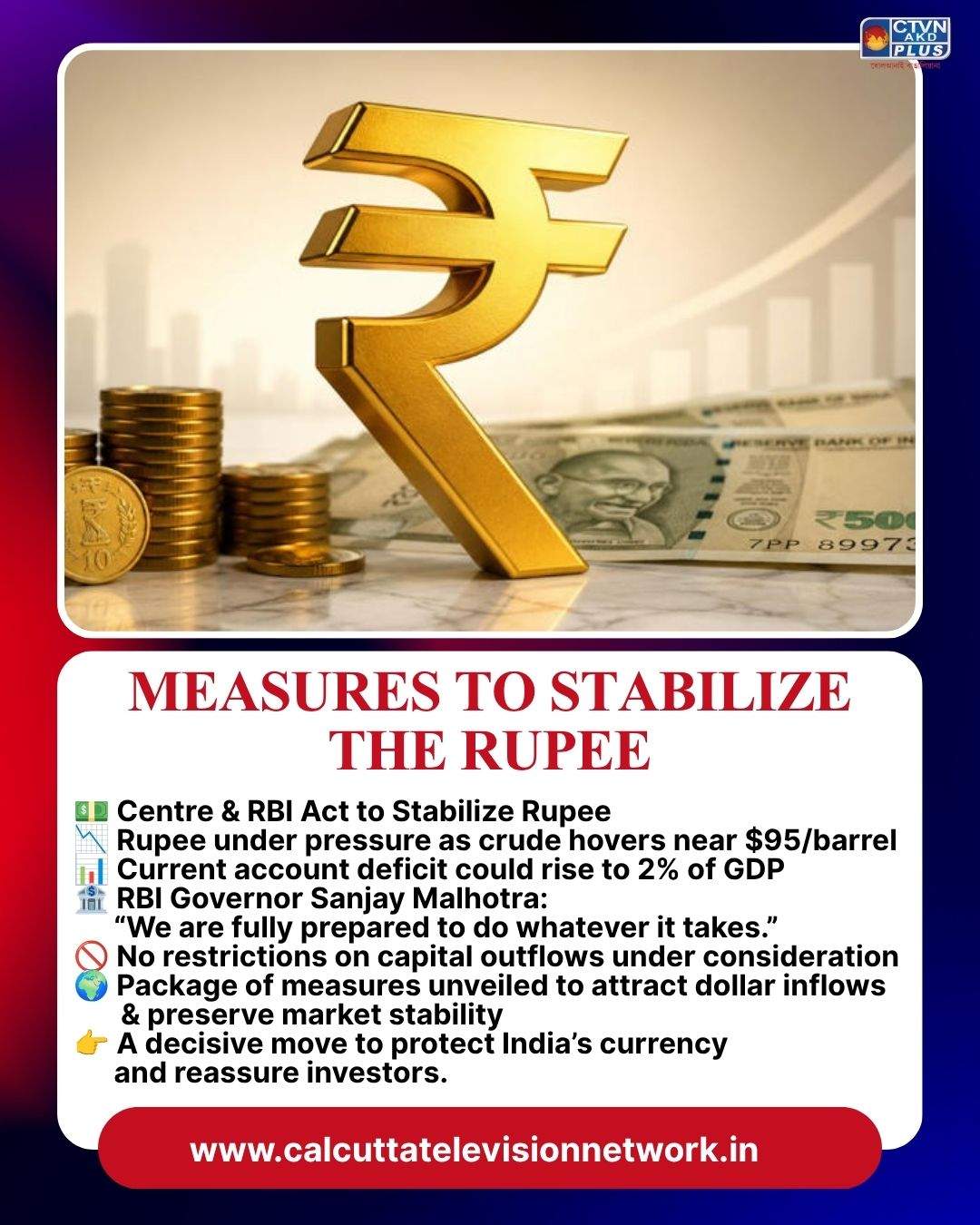
Centre and RBI Unveil Measures to Stabilize the Rupee
India’s financial authorities moved decisively on Friday to counter mounting pressure on the rupee, unveiling a package of measures aimed at attracting dollar inflows and financing a widening current account deficit. With crude oil prices hovering around $95 per barrel, the deficit could nearly double to 2% of GDP this fiscal year, raising concerns about external stability.
The Reserve Bank of India (RBI), under Governor Sanjay Malhotra, signaled its determination to preserve market confidence. “We shall remain vigilant, and we are fully prepared to do whatever it takes to preserve orderly market conditions,” Malhotra told reporters, underscoring the central bank’s readiness to act. Importantly, he ruled out restrictions on capital outflows, clarifying that no such measures were under consideration.
The coordinated package reflects a dual strategy: the Centre is working to attract foreign investment and stabilize external balances, while the RBI is focused on maintaining liquidity and confidence in the currency. Together, these steps are designed to reassure investors and prevent panic in financial markets.
The rupee’s weakness has been exacerbated by elevated energy import costs and global uncertainties. By moving swiftly, the Centre and RBI aim to demonstrate that India’s macroeconomic management remains proactive and resilient. While challenges persist, especially if oil prices remain high, the measures represent a crucial effort to safeguard India’s external position and bolster confidence in the rupee.
#Rupee #RBIMeasures #IndianEconomy #CurrencyStability #DollarInflows #CurrentAccountDeficit #OilPrices #SanjayMalhotra #FinancialMarkets #IndiaFinance