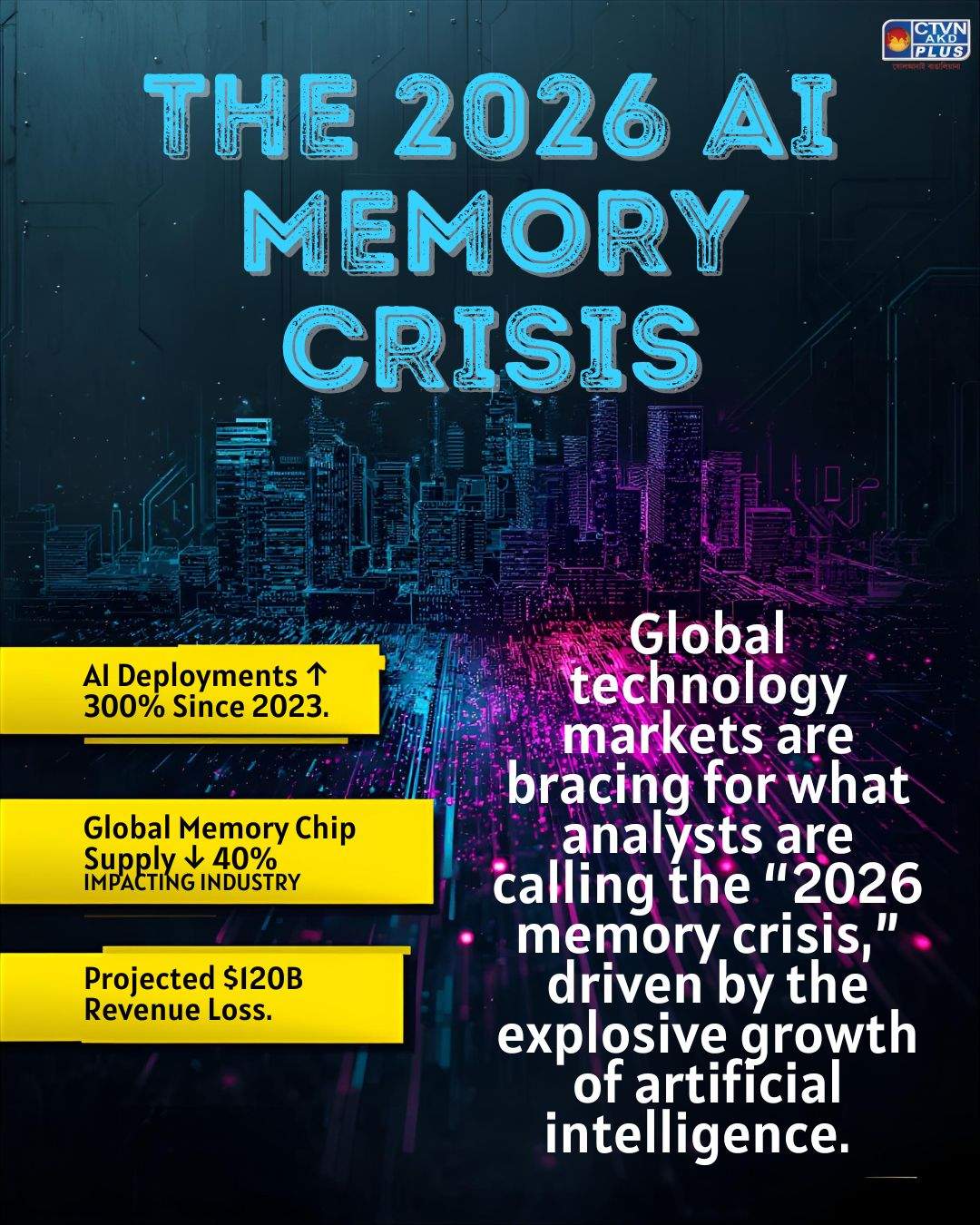
The 2026 AI Memory Crisis
Global technology markets are bracing for what analysts are calling the “2026 memory crisis,” driven by the explosive growth of artificial intelligence. At the heart of the issue is high‑bandwidth memory (HBM), a specialized form of RAM essential for AI chips. Companies such as Nvidia, AMD, and Google are consuming enormous volumes of HBM to power their data centers and training clusters. As a result, leading manufacturers like Samsung, Micron, and SK Hynix are prioritizing AI customers, leaving less production capacity for traditional DRAM used in consumer devices.
This imbalance is expected to push regular DRAM prices up by 50–55% in 2026. For everyday consumers, the impact will be felt across laptops, smartphones, and PCs, where memory costs now account for more than 20% of total device expenses—up from 10–18% in previous years. Device makers are already sounding alarms: Dell has warned of rising costs, while Apple has attempted to downplay the issue, suggesting it can manage supply more effectively.
The crisis illustrates how AI’s rapid expansion is reshaping global supply chains. Memory, once a relatively stable commodity, has become a strategic resource. With cloud providers and hyperscalers competing for limited supplies, consumer markets are squeezed. Analysts predict that higher costs will ripple across industries, from personal electronics to enterprise IT and even automotive manufacturing, where DRAM shortages could disrupt production by 2028.
Ultimately, the 2026 memory crunch highlights the unintended consequences of technological revolutions. While AI promises transformative benefits, its appetite for advanced hardware is straining global capacity. Unless new production facilities or alternative technologies emerge, consumers and businesses alike will face higher prices and tighter supply. The crisis is a reminder that innovation often comes with hidden costs, reshaping not only industries but also everyday life.