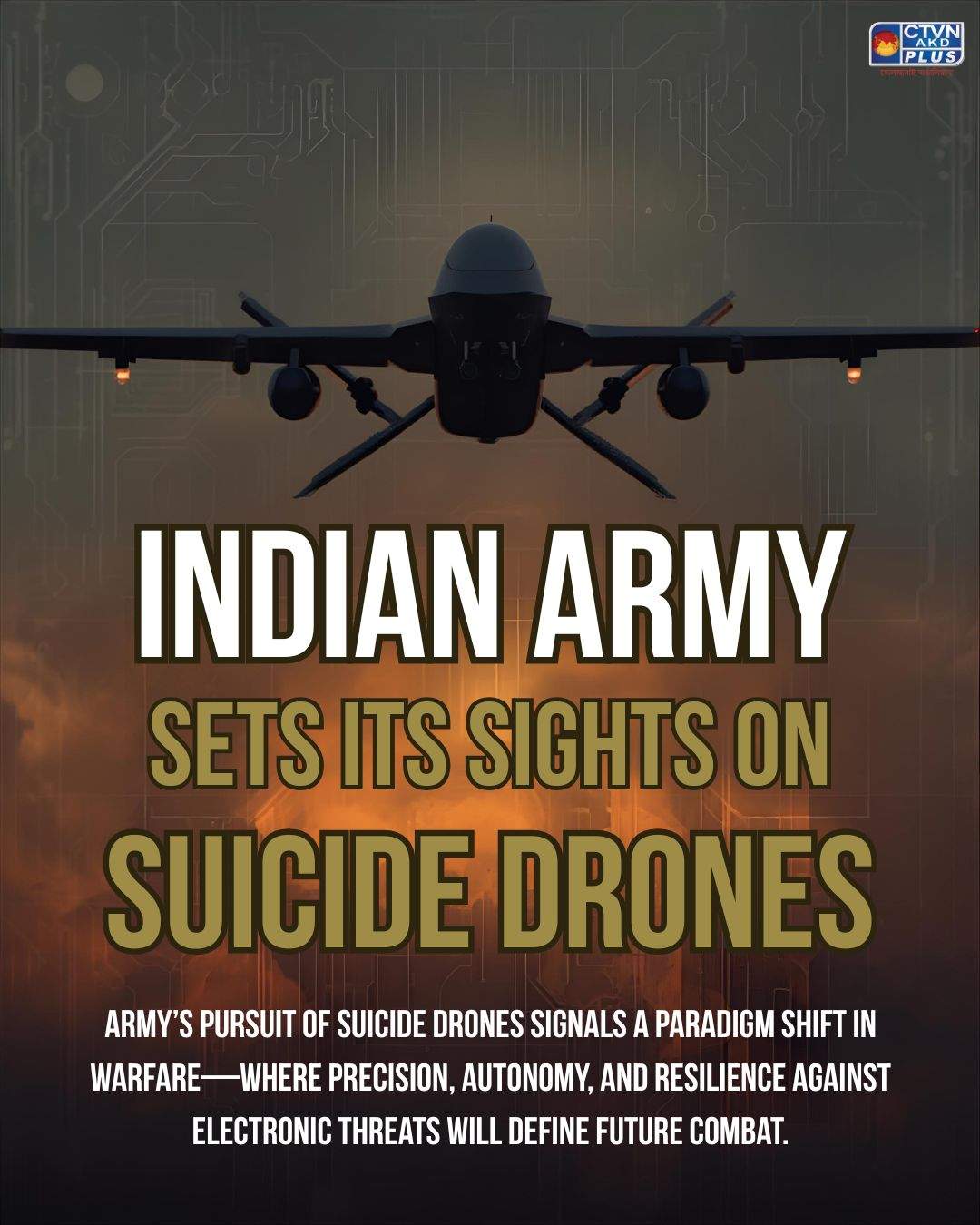
Army Sets Sights on Indigenous Suicide Drones
The Indian Army is preparing to take a decisive leap in modern warfare by investing in indigenous loitering munitions—often referred to as suicide drones—that can strike deep into enemy territory with precision. These systems are being designed to operate even in contested environments where electronic jamming and spoofing are prevalent, underscoring the Army’s push for resilient, next‑generation capabilities.
According to sources, tenders for the ambitious project are expected to be issued soon, with domestic industry players gearing up to showcase indigenously developed solutions. The initial contract is valued at ₹2,000 crore, but the scale of the initiative is expected to expand significantly as the Army plans to equip multiple units with these drones. The systems will be capable of executing both shallow and deep strikes across the border, offering commanders flexible options in combat scenarios.
This move aligns with Army Chief General Upendra Dwivedi’s vision of integrating drones and loitering munitions into mainstream operations. His “Eagle on every Arm” concept aims to provide each soldier with drone capability, transforming the Army’s tactical edge and enhancing situational awareness on the battlefield. By raising specialized drone units, the Army seeks to institutionalize unmanned systems as a core element of its force structure.
The emphasis on indigenous development is also significant. It reflects India’s broader strategic goal of reducing dependence on foreign suppliers while fostering innovation within its defence ecosystem. For industry, the project represents a major opportunity to deliver cutting‑edge solutions tailored to India’s operational needs.
Ultimately, the Army’s pursuit of suicide drones signals a paradigm shift in warfare—where precision, autonomy, and resilience against electronic threats will define future combat. If successfully implemented, this initiative could reshape India’s military posture and strengthen its deterrence capabilities in a volatile regional environment.