Oil Prices Surge Amid Iran’s New Leadership and Escalating Tensions
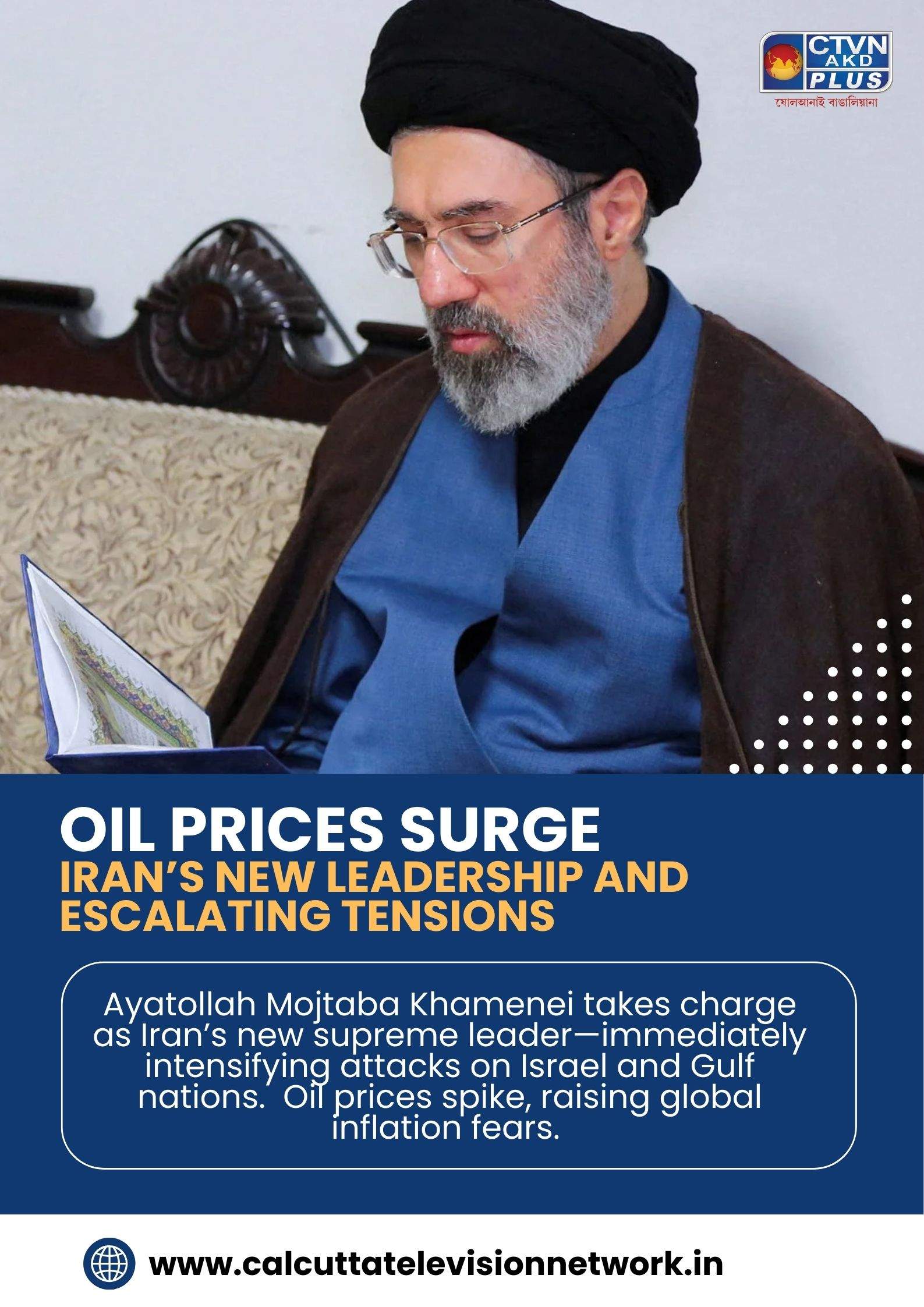
The Middle East entered a new phase of volatility on Monday as Iran announced Ayatollah Mojtaba Khamenei, son of the late Supreme Leader, as its new head of state. His appointment immediately coincided with intensified military actions against Israel and Gulf nations, signaling a more aggressive posture from Tehran. Analysts believe Mojtaba Khamenei will play a decisive role in shaping Iran’s war strategies, potentially prolonging the conflict.
Global markets reacted sharply. Oil prices surged, sparking fears of inflationary pressure in the United States and reduced consumer spending. In Asia, the Tokyo Nikkei 225 index plunged by nearly 7% in early trading, reflecting investor anxiety over the widening conflict.
Saudi Arabia responded firmly, warning that Iran would be the “biggest loser” if it continued its attacks on Arab nations. This statement followed a drone strike on the Shaybah oil field, raising concerns about the vulnerability of critical energy infrastructure. Meanwhile, the humanitarian toll deepened in Gaza, where three Palestinians—including two women and a child—were killed in an Israeli strike. The victims were sheltering in a tent at a camp for displaced persons, underscoring the devastating impact on civilians.
In Lebanon, lawmakers extended the parliamentary term by two years, citing the disruption caused by ongoing hostilities with Israel. Over half a million people have already been displaced, complicating the political process.
Israel’s military reported that Iran has been deploying cluster munitions against civilian areas in Jerusalem and central Israel almost daily, intensifying the humanitarian crisis. International reactions were swift: Russian President Vladimir Putin congratulated Mojtaba Khamenei and pledged support, while China urged respect for Iran’s internal affairs and called for renewed negotiations.
The convergence of leadership change, military escalation, and economic disruption highlights the fragile state of the region. With oil prices climbing and civilian casualties mounting, the conflict threatens to reshape both Middle Eastern geopolitics and global economic stability.