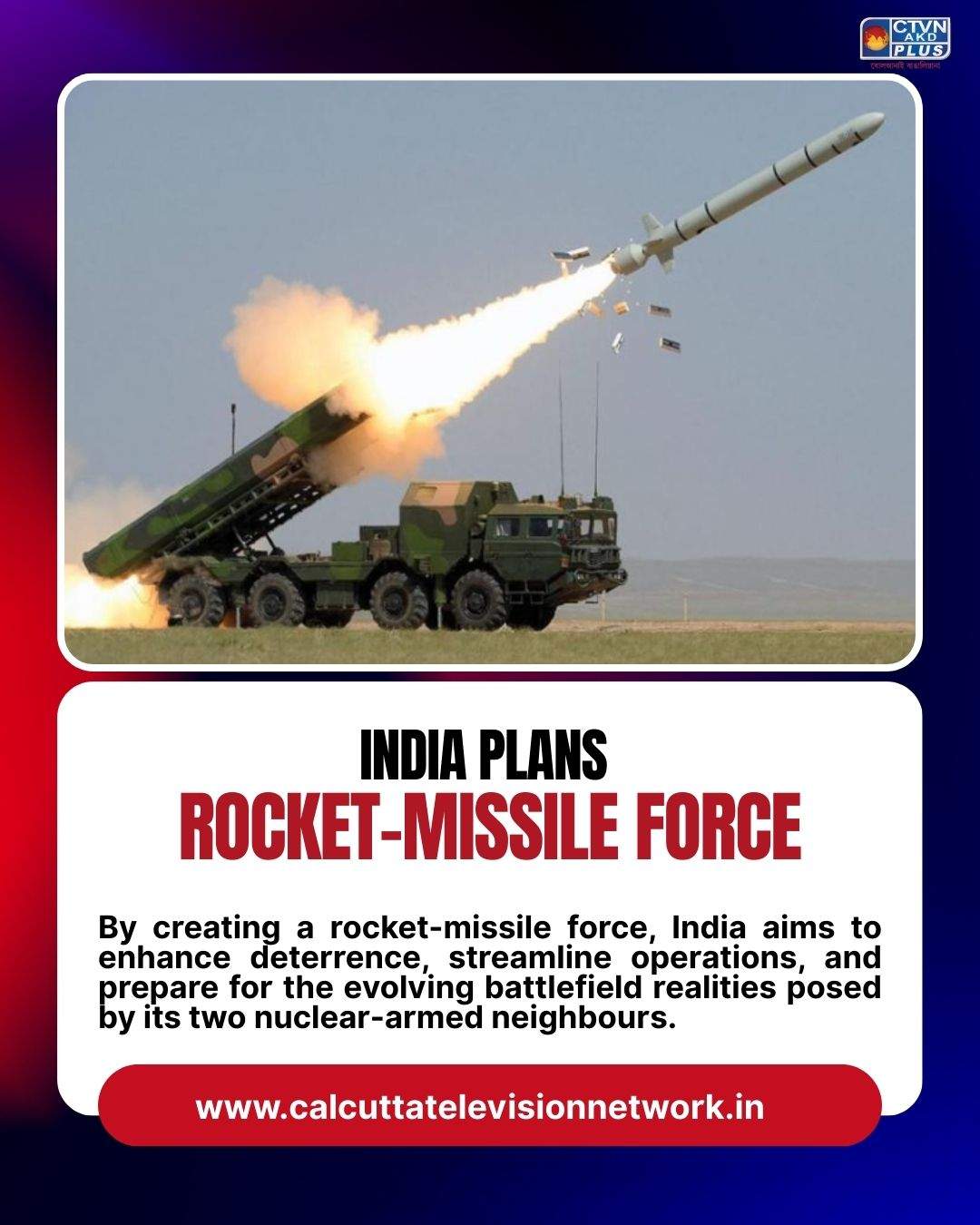
India Plans Rocket-Missile Force Amid Twin Threats
India is preparing to establish a dedicated rocket-cum-missile force, a long-pending demand that has gained urgency in the wake of Operation Sindoor and the lessons drawn from conflicts in Ukraine and the Middle East. Army Chief General Upendra Dwivedi, speaking on Army Day, described the unit as the “need of the hour,” pointing to Pakistan and China—both of which already maintain specialized rocket forces—as immediate drivers of India’s decision.
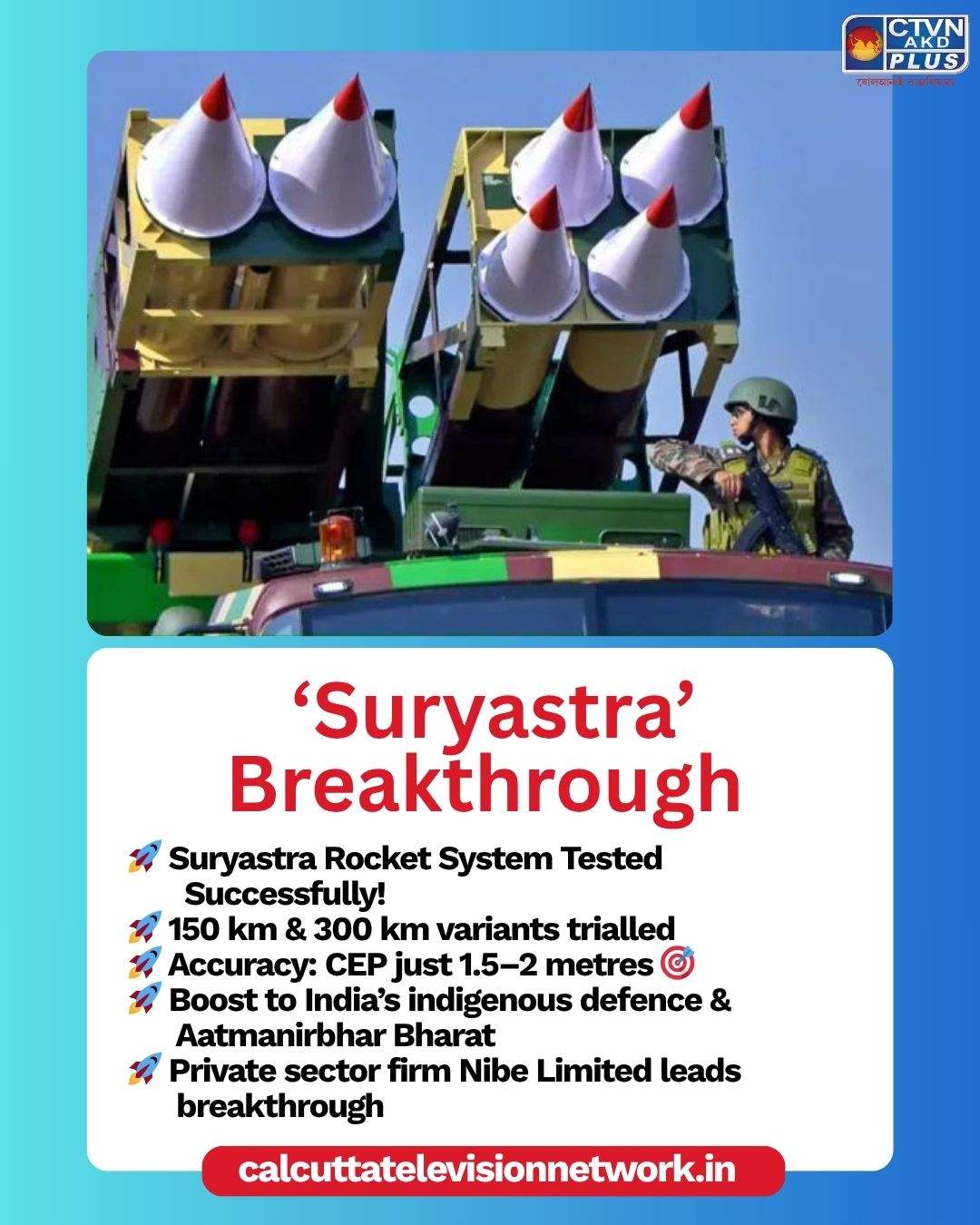
Currently, India’s missile and rocket systems are divided between the Corps of Army Air Defence and artillery regiments. However, modern warfare increasingly relies on long-range precision strikes, where rockets and missiles complement each other. India’s arsenal already includes indigenous and joint systems such as Agni, BrahMos, Prithvi, Pralay, and the Pinaka guided rocket, with contracts signed for missiles capable of ranges up to 450 km.
China’s People’s Liberation Army Rocket Force (PLARF), with over 1,250 ballistic and cruise missiles and a growing nuclear stockpile, represents a formidable challenge. Pakistan, after suffering losses during hostilities in May 2025, has quickly set up its Army Rocket Force Command (ARFC), modelled on China’s PLARF, to strengthen its long-range strike capabilities. While India’s missile quality and range remain superior, Pakistan’s new unit could pose risks through saturation attacks in a short conflict.
India may also draw lessons from Iran’s Islamic Revolutionary Guard Corps Aerospace Force (IRGCASF), which operates a vast missile arsenal and underground launch networks. Iran’s ability to overwhelm Israel’s Iron Dome in recent clashes demonstrates the deterrent power of a well-integrated rocket force.
The rise of missile-centric warfare underscores India’s need to consolidate its capabilities under one command. By creating a rocket-missile force, India aims to enhance deterrence, streamline operations, and prepare for the evolving battlefield realities posed by its two nuclear-armed neighbours.