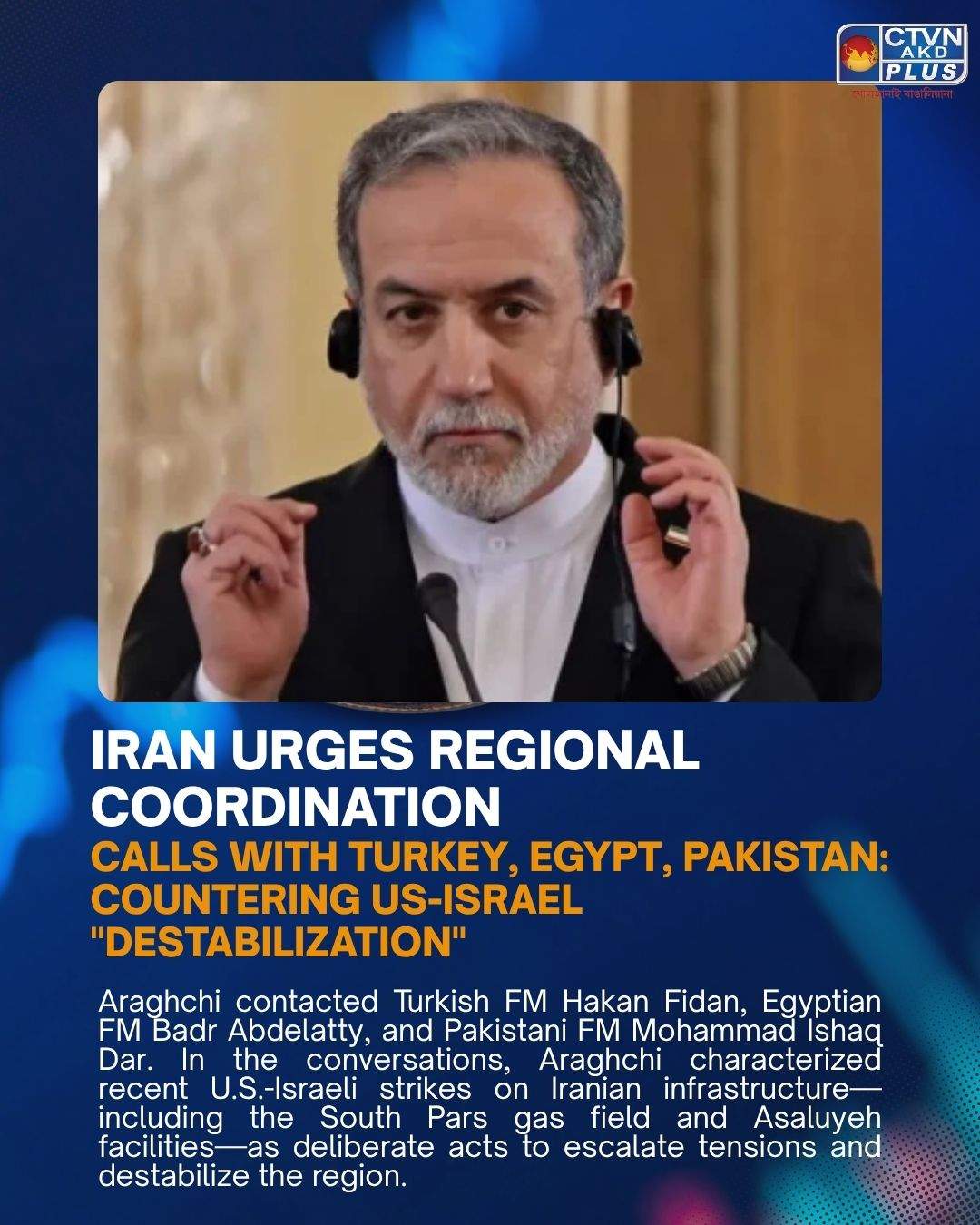
Iran Urges Regional Coordination in Calls with Turkey, Egypt, Pakistan: Countering US-Israel "Destabilization"
On March 19, 2026, Iranian state media (IRNA, Tasnim, PressTV) reported that Araghchi contacted Turkish FM Hakan Fidan, Egyptian FM Badr Abdelatty, and Pakistani FM Mohammad Ishaq Dar. In the conversations, Araghchi characterized recent U.S.-Israeli strikes on Iranian infrastructure—including the South Pars gas field and Asaluyeh facilities—as deliberate acts to escalate tensions and destabilize the region.
He called for heightened vigilance and coordinated responses among regional countries to counter these threats, emphasizing shared interests in preventing further deterioration of security. The calls coincide with Iran's military warning of a tougher response to additional attacks on its energy assets, following retaliatory strikes on Gulf facilities (e.g., UAE's Habshan, Qatar's Ras Laffan).
This outreach builds on Iran's broader diplomatic push amid alliance fractures: Turkey's Erdoğan recently condemned Israeli assassinations as "illegal," Oman criticized U.S. involvement as a "historic miscalculation," and European/Japanese statements expressed readiness for "appropriate" Hormuz support without firm military commitments.
The timing contrasts with Gulf states' Riyadh summit (March 18), where ministers from Saudi Arabia, UAE, Qatar, and others (including Egypt, Pakistan, Turkey) condemned Iranian attacks, integrated air defenses, and backed UNSC Resolution 2817 demanding Iran halt hostilities. Iran's calls appear aimed at rallying non-GCC Muslim-majority neighbors to form a counter-narrative or buffer against perceived Western aggression.
Analysts see this as Tehran's effort to exploit divisions: isolating U.S.-led efforts to reopen the Strait of Hormuz (still ~97% choked), leveraging anti-Israel sentiment (e.g., in Turkey, Pakistan), and pressuring Egypt (a key Arab mediator) amid Gulf condemnations. No formal alliance emerged from the calls, but they highlight Iran's strategy of asymmetric diplomacy alongside military defiance.
As oil/gas prices remain elevated (~$110/barrel Brent) and energy disruptions persist, these conversations underscore the conflict's diplomatic layering—Tehran seeks regional solidarity to offset isolation, while Gulf coordination hardens against it.


