Trump Rejects Ceasefire: Pursuit of “Victory” in Iran Conflict
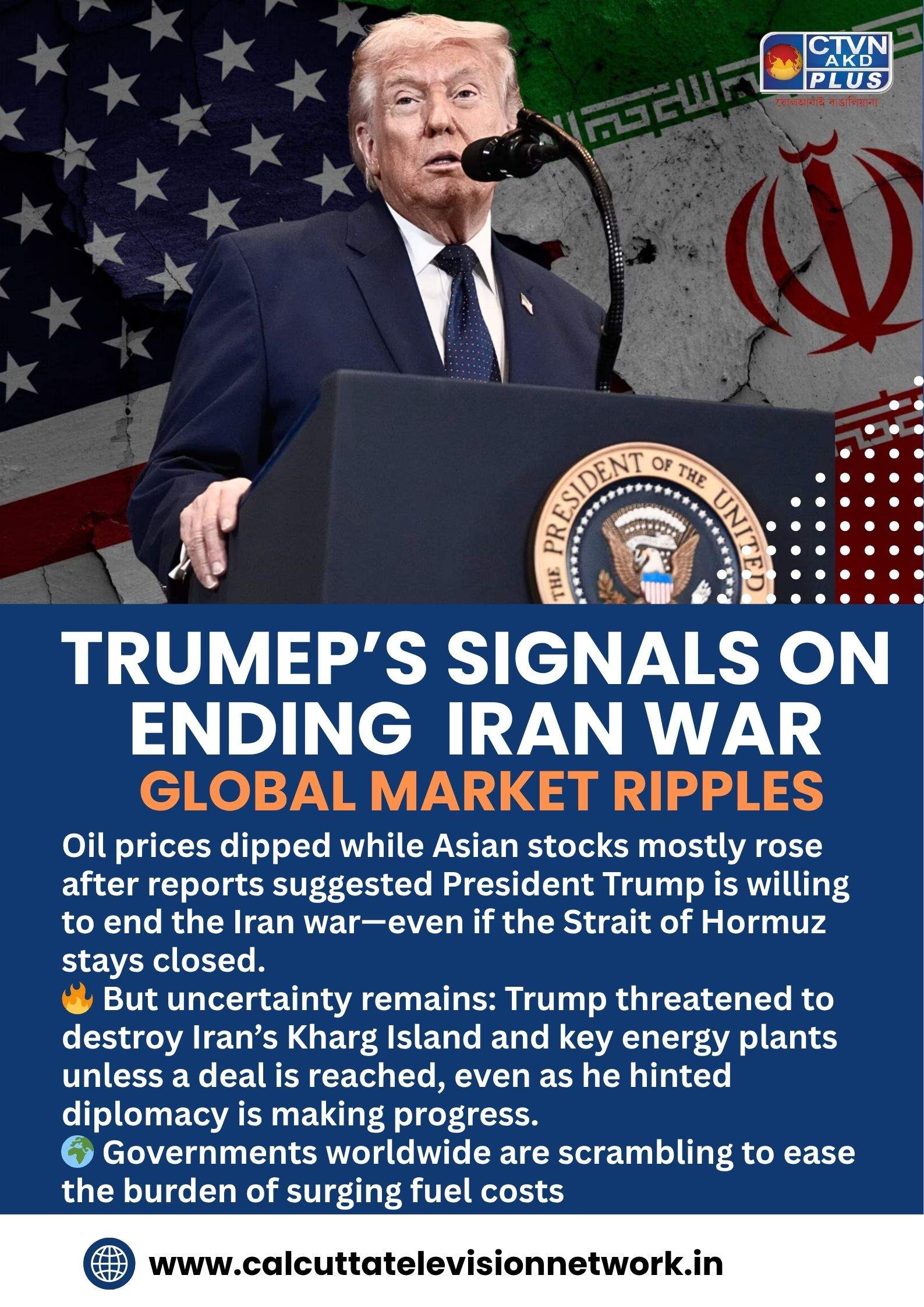
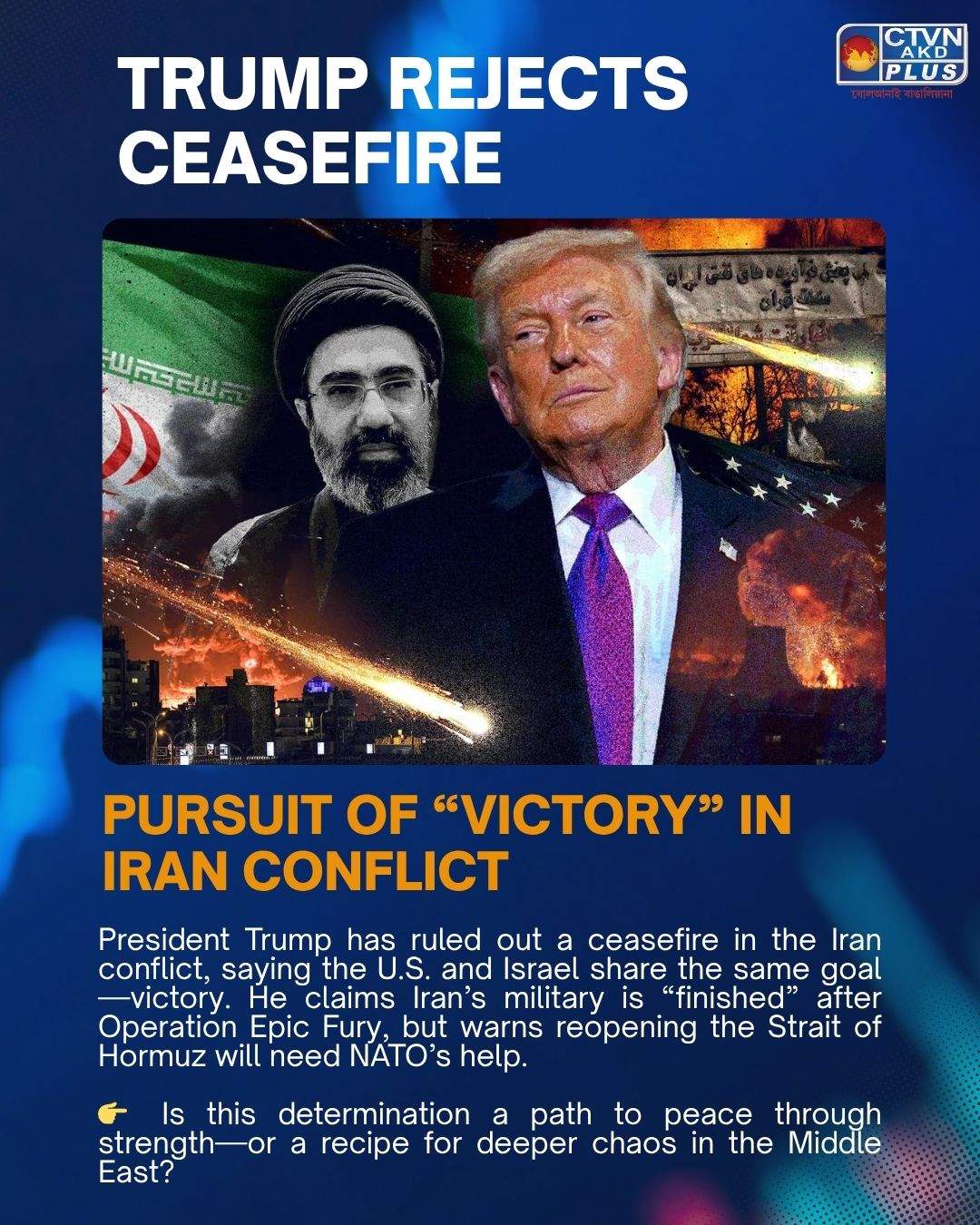
The intensifying conflict between Iran, Israel, and the United States has taken a sharper turn with President Donald Trump’s latest remarks. Speaking to the media, Trump declared that while dialogue remains possible, he does not support a ceasefire. His reasoning was blunt: “You don’t do a ceasefire when you’re literally obliterating the other side.”
Trump emphasized that both the United States and Israel share the same objective—victory. He suggested that Israel would likely end the war whenever Washington decides, underscoring the close alignment between the two allies. His comments reflect a determination to continue military operations until decisive outcomes are achieved.
The President spoke harshly about Iran’s leadership, describing them as “thugs” and “horrible people.” He referenced reports of executions linked to protests, citing the killing of three young demonstrators as evidence of Iran’s brutality. Militarily, Trump claimed that “Operation Epic Fury” had already dismantled Iran’s navy, air force, and anti-aircraft systems, leaving the country “finished” from a defense standpoint.
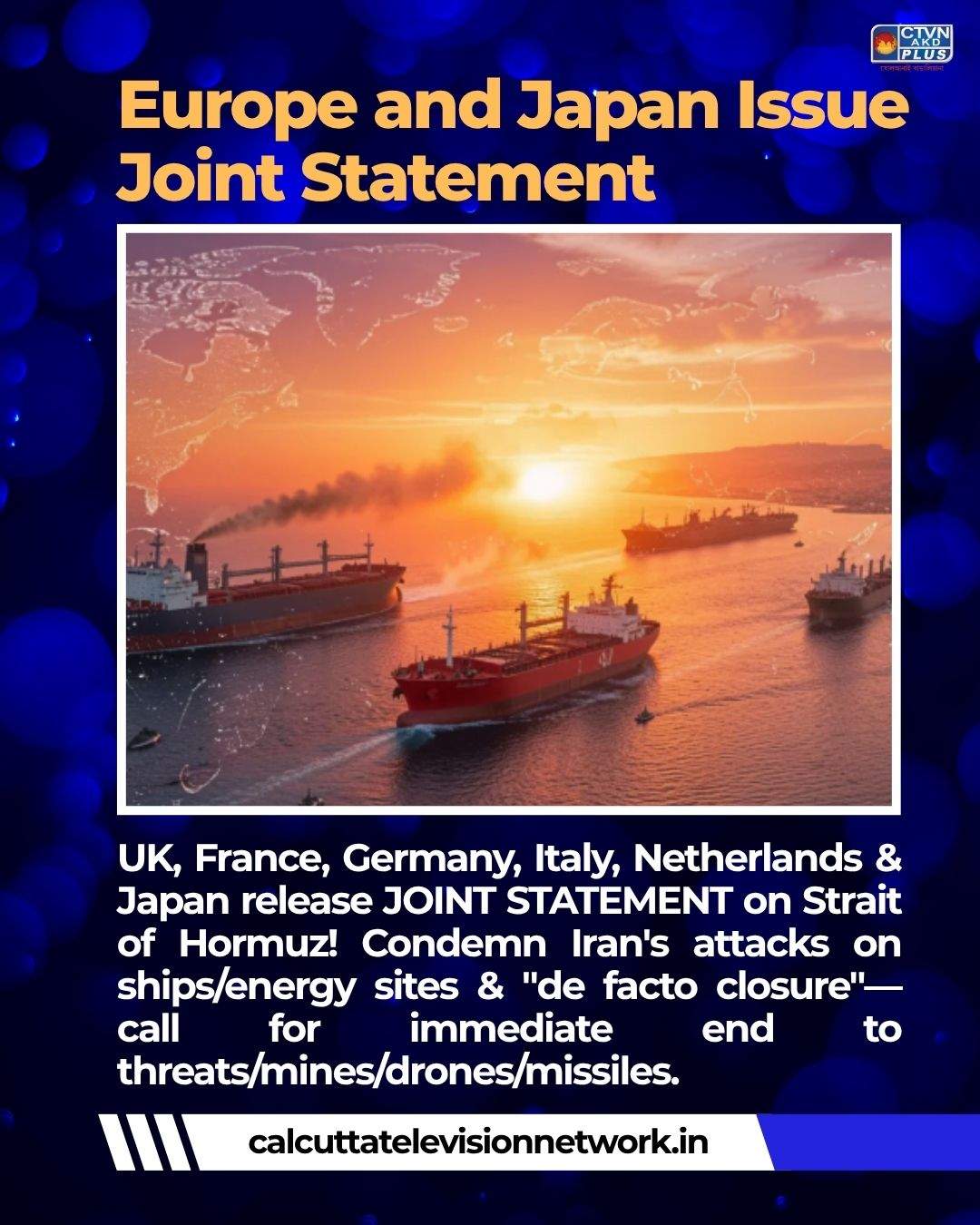
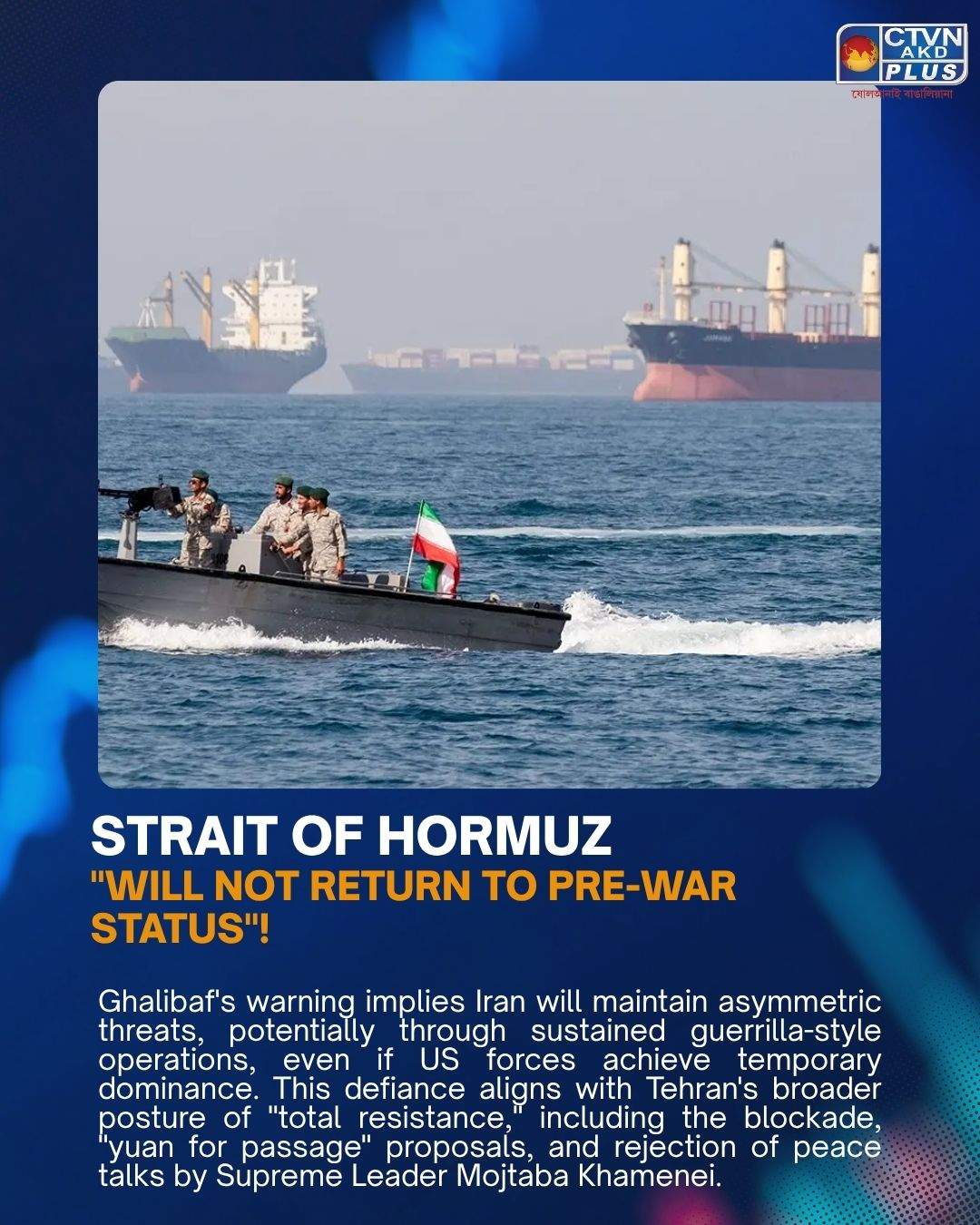
On the strategic Strait of Hormuz, Trump acknowledged that reopening the waterway would require international cooperation, particularly from NATO allies who depend heavily on its energy flows. His criticism of NATO’s limited role highlighted broader frustrations with burden-sharing among Western partners.
By refusing a ceasefire, Trump has signaled that the U.S. intends to press ahead with military escalation. This stance raises global concerns about the potential for prolonged instability in the Middle East, disruption of energy supplies, and the risk of further escalation. The world now watches closely as Washington and Tel Aviv pursue “victory,” while Tehran shows no signs of retreat.