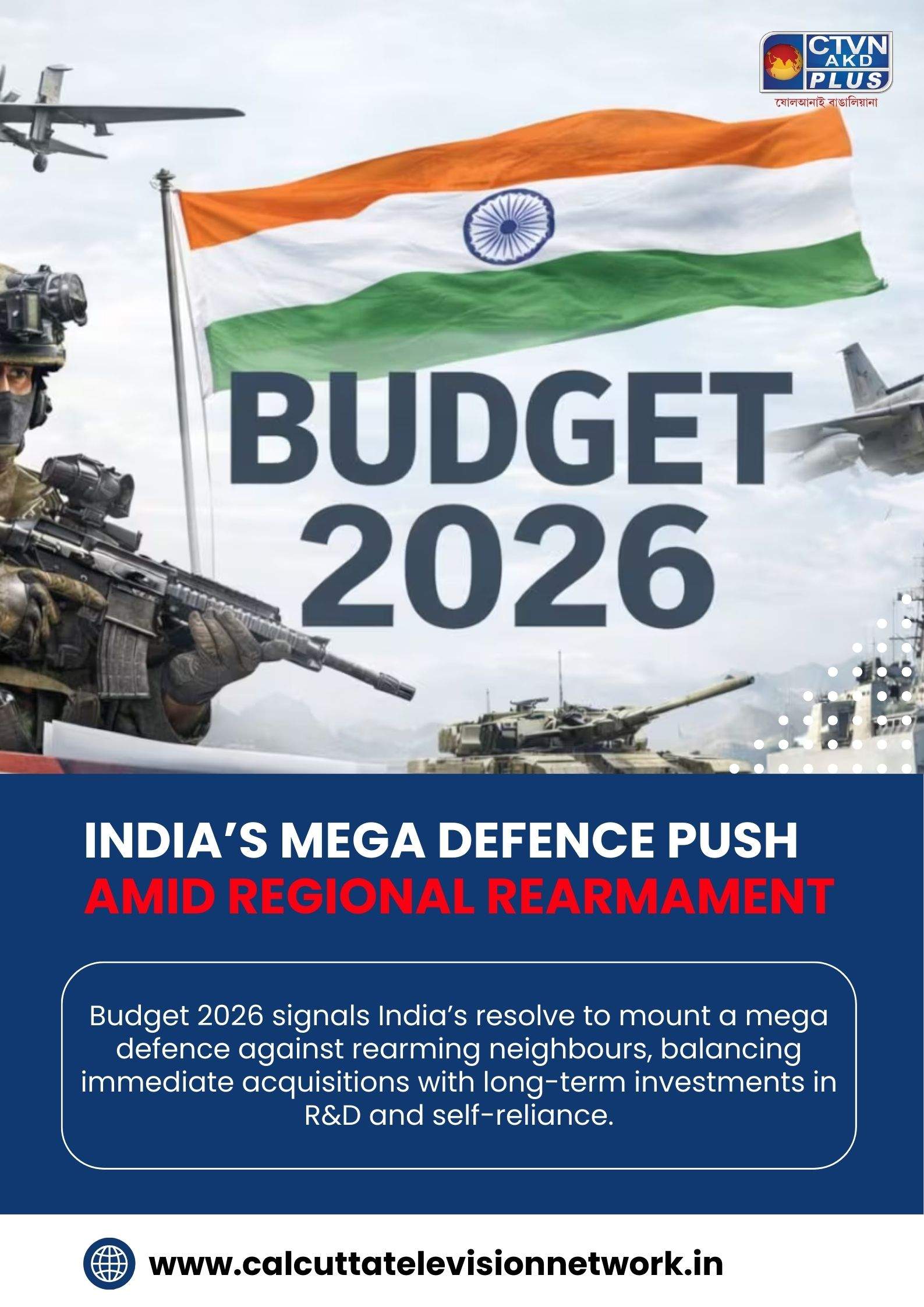
Budget 2026: India’s Mega Defence Push Amid Regional Rearmament
India’s Union Budget 2026 marks a decisive moment in the country’s defence trajectory, with a record 15 per cent hike in defence outlay to ₹7.84 lakh crore, up from ₹6.81 lakh crore in the previous fiscal. This allocation, the largest among all ministries, underscores New Delhi’s determination to bolster military preparedness against volatile geopolitics and the rapid rearmament of its neighbours.
A striking feature of the budget is the ₹2.19 lakh crore capital outlay for modernisation, reflecting a sharp 22 per cent rise. This funding is earmarked for major acquisitions, including Rafale fighter jets, submarines, and unmanned aerial systems. The Indian Air Force alone has received a substantial boost, with allocations rising to ₹72,000 crore, potentially paving the way for the long-discussed deal for 114 Rafale jets.
Despite this surge, defence spending remains at around 2 per cent of GDP, below the 2.5 per cent benchmark that many strategic experts argue is essential to counter the collusive threat posed by China and Pakistan. Both nations are aggressively modernising: Pakistan through acquisitions from China and Turkey, and China by expanding its defence footprint across South Asia. Bangladesh, under its Forces Goal 2030 programme, is also pursuing advanced fighter aircraft and missile systems, further intensifying the regional arms race.
India’s response is not limited to acquisitions. In line with the government’s atmanirbharta (self-reliance) vision, the defence R&D budget has risen by 15.5 per cent to ₹17,250 crore. This investment aims to strengthen indigenous design, innovation, and manufacturing capabilities, reducing dependence on foreign suppliers.
Operational readiness has also been prioritised, with a 17.24 per cent increase in defence services revenue allocation to cover maintenance, ammunition, fuel, and salaries. Meanwhile, the defence pension bill has climbed to ₹1.71 lakh crore, reflecting the enduring financial commitment to veterans.
Finance Minister Nirmala Sitharaman’s announcement of a customs duty waiver on raw materials for aircraft component manufacturing further supports domestic defence industries, particularly in maintenance, repair, and overhaul (MRO) activities.
In essence, Budget 2026 signals India’s resolve to mount a mega defence against rearming neighbours, balancing immediate acquisitions with long-term investments in R&D and self-reliance. While the spending level remains below expert recommendations, the trajectory is clear: India is preparing for a future where regional security challenges demand both strength and innovation.