China’s “Star Wars” Warship: Ambition or Illusion?
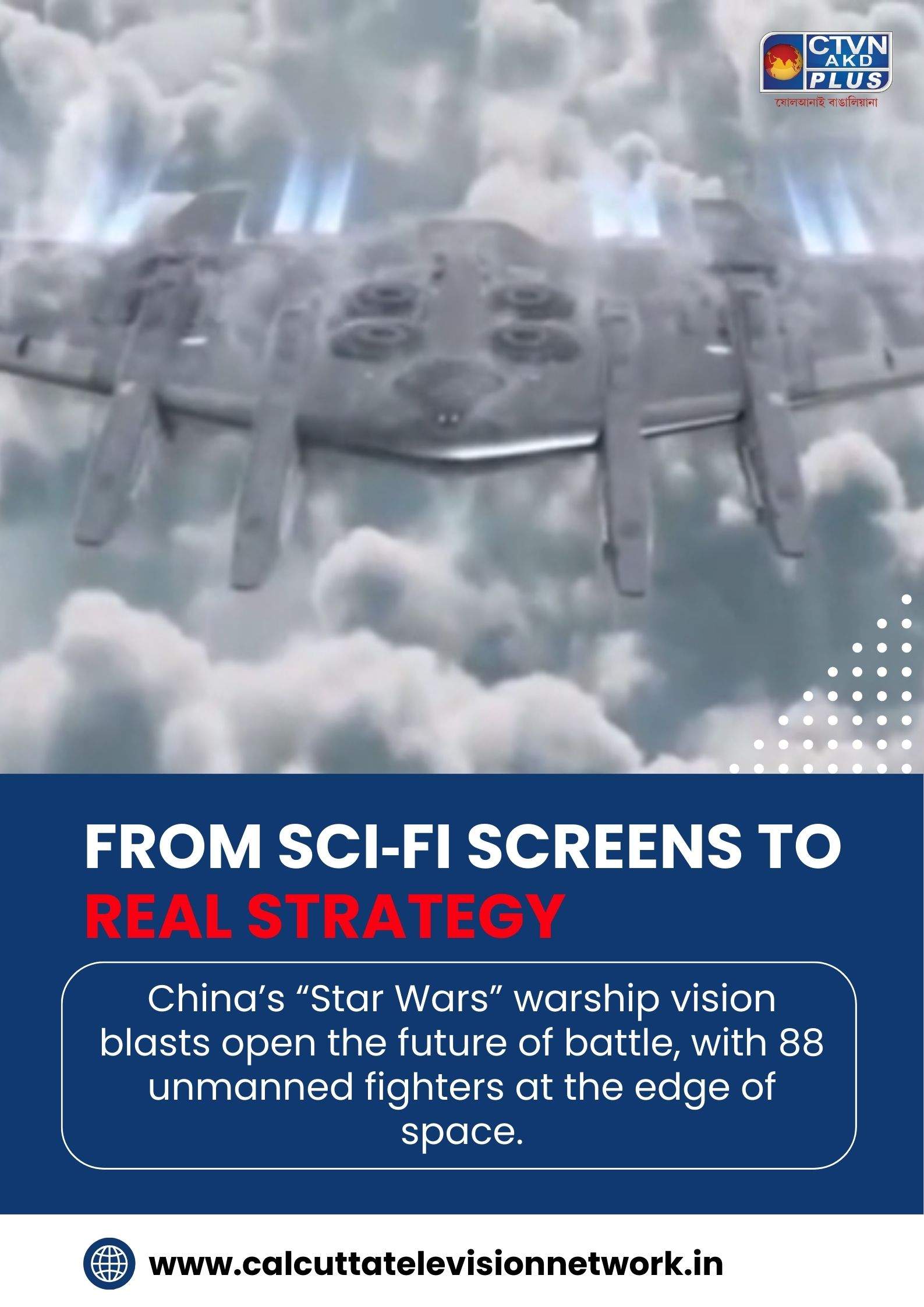
China has unveiled a striking vision of future warfare: a colossal, triangular warship dubbed Luanniao, designed to resemble a Star Wars-style space carrier. This futuristic concept, revealed through state media, is part of the broader Nantianmen initiative, which imagines military platforms operating at the edge of Earth’s atmosphere. The warship is projected to carry up to 88 unmanned stealth drones, each capable of launching hypersonic missiles from near-space.
The sheer scale of the design is staggering. At 242 meters long, 684 meters wide, and weighing around 120,000 tons, Luanniao would dwarf even the largest U.S. aircraft carriers. Its fleet of unmanned “Xuan Nu” drones represents a radical departure from traditional naval aviation, emphasizing autonomy, stealth, and speed. If realized, such a vessel could redefine the balance of power in aerospace warfare, giving China unprecedented reach and deterrence capabilities.
Yet skepticism abounds. Analysts note that the technological hurdles are immense: coordinating dozens of hypersonic-capable drones, sustaining operations at near-space altitudes, and developing propulsion systems for such a massive craft remain far beyond current engineering limits. Financial costs would also be astronomical, raising doubts about whether China could sustain such a program over decades.
Strategically, the unveiling serves a symbolic purpose. It signals China’s ambition to dominate future battlefields, projecting an image of technological superiority and inspiring nationalist pride. At the same time, it raises alarms internationally, potentially accelerating an arms race in space militarization.
Ultimately, Luanniao may be less about imminent deployment and more about showcasing China’s long-term vision. Whether it becomes a reality in 20–30 years or remains a science-fiction dream, the concept underscores how military imagination is increasingly shaped by futuristic, cinematic imagery—and how nations use such visions to stake claims in the geopolitics of tomorrow.