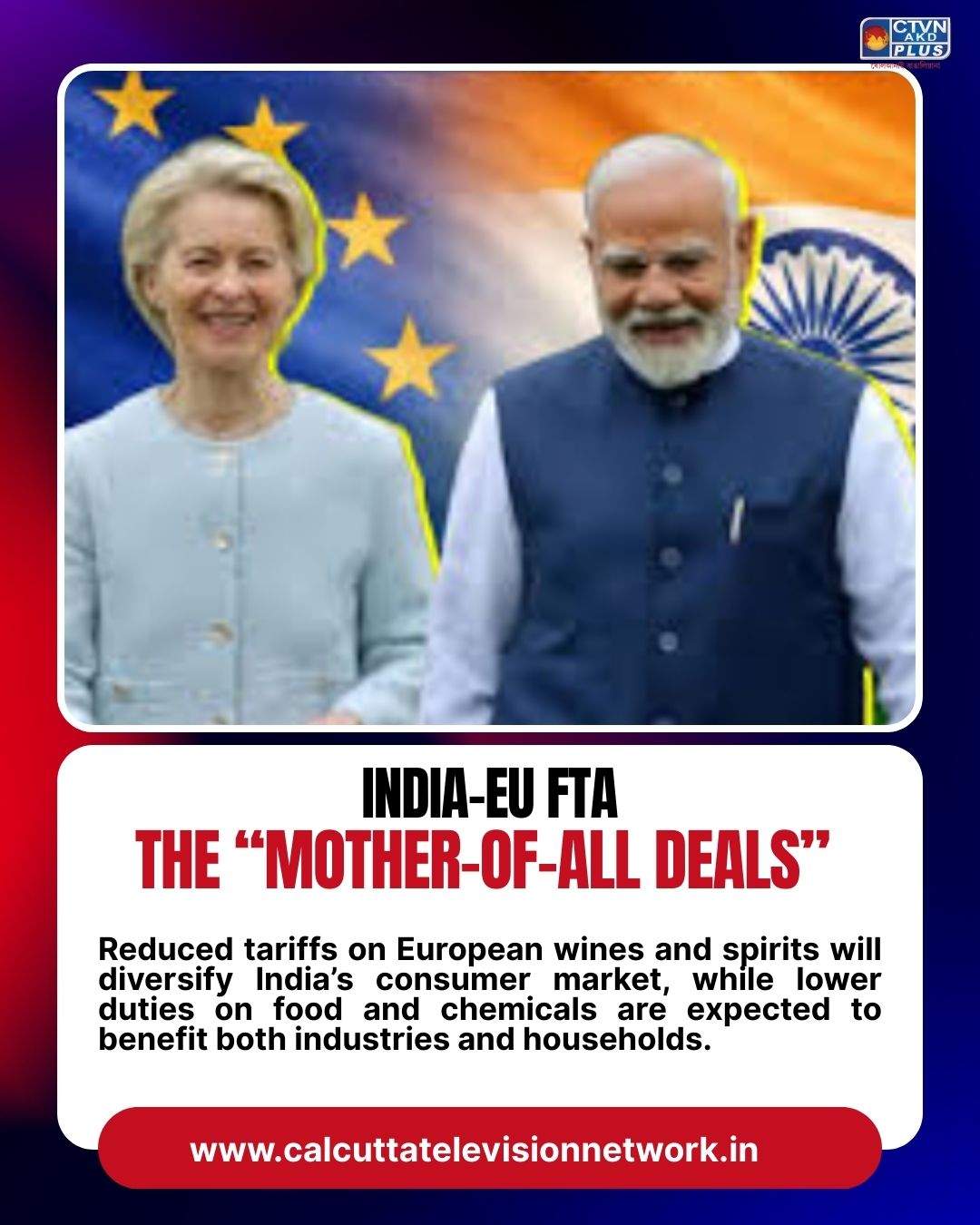
India–EU FTA: The “Mother-of-All Deals”
The signing of the India–European Union Free Trade Agreement (FTA) marks a historic milestone in global commerce, hailed as the “mother-of-all deals.” This pact, years in the making, promises to reshape economic relations between New Delhi and Brussels by dismantling long-standing trade barriers.
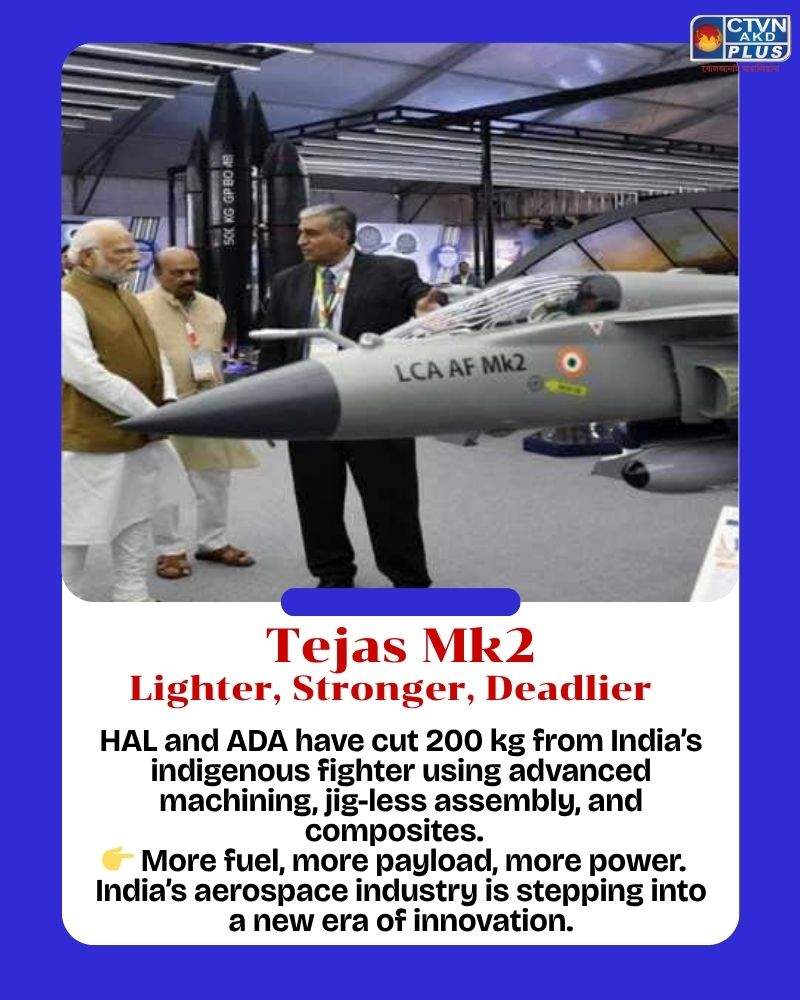
One of the most striking features of the agreement is the elimination of tariffs on aircraft. For India, this opens the door to cheaper aviation imports, potentially boosting its rapidly expanding airline industry and strengthening connectivity across the subcontinent. For European manufacturers, it secures access to one of the world’s fastest-growing aviation markets, ensuring competitiveness against rivals in Asia and North America.
Beyond aviation, the deal cuts duties on alcohol, food products, and chemicals—sectors that have often been contentious in trade negotiations. Reduced tariffs on European wines and spirits will diversify India’s consumer market, while lower duties on food and chemicals are expected to benefit both industries and households. These measures not only encourage greater trade flows but also symbolize a commitment to liberalization and mutual growth.
Strategically, the FTA enhances India’s position as a global economic player. By deepening ties with the EU, India diversifies its trade partnerships at a time when global supply chains are shifting and geopolitical tensions are high. For the EU, the deal strengthens engagement with a democratic, fast-growing economy that offers both scale and stability.
The agreement also carries symbolic weight. It reflects a shared vision of cooperation between two major democracies, bridging continents through commerce. While challenges remain—such as ensuring fair competition and addressing regulatory differences—the FTA sets a precedent for ambitious, future-oriented trade diplomacy.
In essence, the India–EU FTA is not just about tariffs and duties; it is about forging a partnership that could redefine economic landscapes and strengthen political bonds across Eurasia.