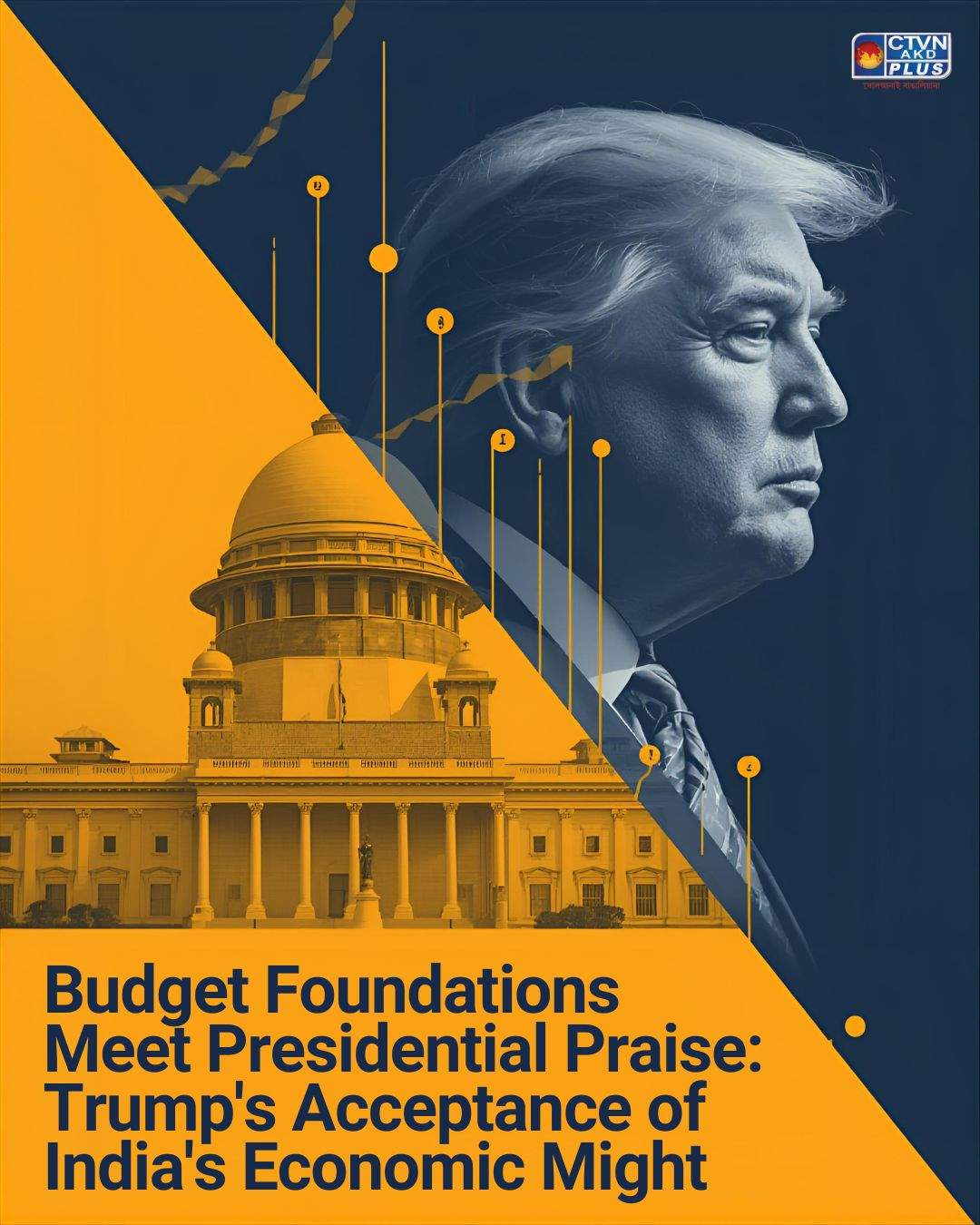
Budget Foundations Meet Presidential Praise: Trump's Acceptance of India's Economic Might
The Union Budget 2026-27, presented on February 1, 2026, powerfully demonstrated India's economic resilience and independence, rendering US President Donald Trump's earlier high tariffs largely ineffective in altering India's growth trajectory.
The Budget projected steady real GDP growth (~7.4% current year, 6.8–7.2% for FY27), record capital expenditure (₹12.2 lakh crore), fiscal discipline (deficit at 4.3% of GDP), and targeted support for manufacturing, infrastructure, and export sectors like textiles and semiconductors. These measures "tariff-proofed" key industries, diversified markets (e.g., via recent EU/UK deals), and boosted domestic competitiveness—showing India's path remained firmly upward despite US tariffs reaching up to 50% (25% reciprocal + 25% punitive over Russian oil purchases).
This internal strength underscored the futility of Trump's tariff strategy, which aimed to pressure India on energy imports and trade imbalances but risked harming US consumers, exporters, and supply chains through higher costs and retaliation risks. Analysts noted tariffs often backfire, hurting the imposing economy more in prolonged disputes.
Trump's announcement on February 2, 2026—via Truth Social after a phone call with PM Narendra Modi—effectively conceded this point. He reduced tariffs to 18% "effective immediately" (dropping the punitive layer), framing it as arising from "friendship and respect" for Modi, a "powerful and respected leader." In exchange, India committed to shifting oil purchases away from Russia toward US/Venezuela sources and increasing US imports.
The timing amplified Trump's "give-in": Negotiations had dragged for months (tariffs imposed mid-2025), with reports of delays partly over protocol (e.g., a Modi call to "close" the deal, as per US Commerce Secretary comments in January 2026). Trump waited amid stalled talks, but the Budget's display of unyielding momentum—coupled with India's market diversification—likely tipped the balance. He finally called Modi on Monday (February 2), announcing the deal hours later.
Markets validated this: After a Budget-day dip, the Sensex surged dramatically on February 3, reflecting relief and confidence in India's leverage.
Ultimately, the events show Trump's tariffs failed to suppress India's rise; instead, they prompted a pragmatic US retreat, affirming India's economic autonomy and strategic patience in negotiations.