MILAN‑26 and India’s Expanding Maritime Role
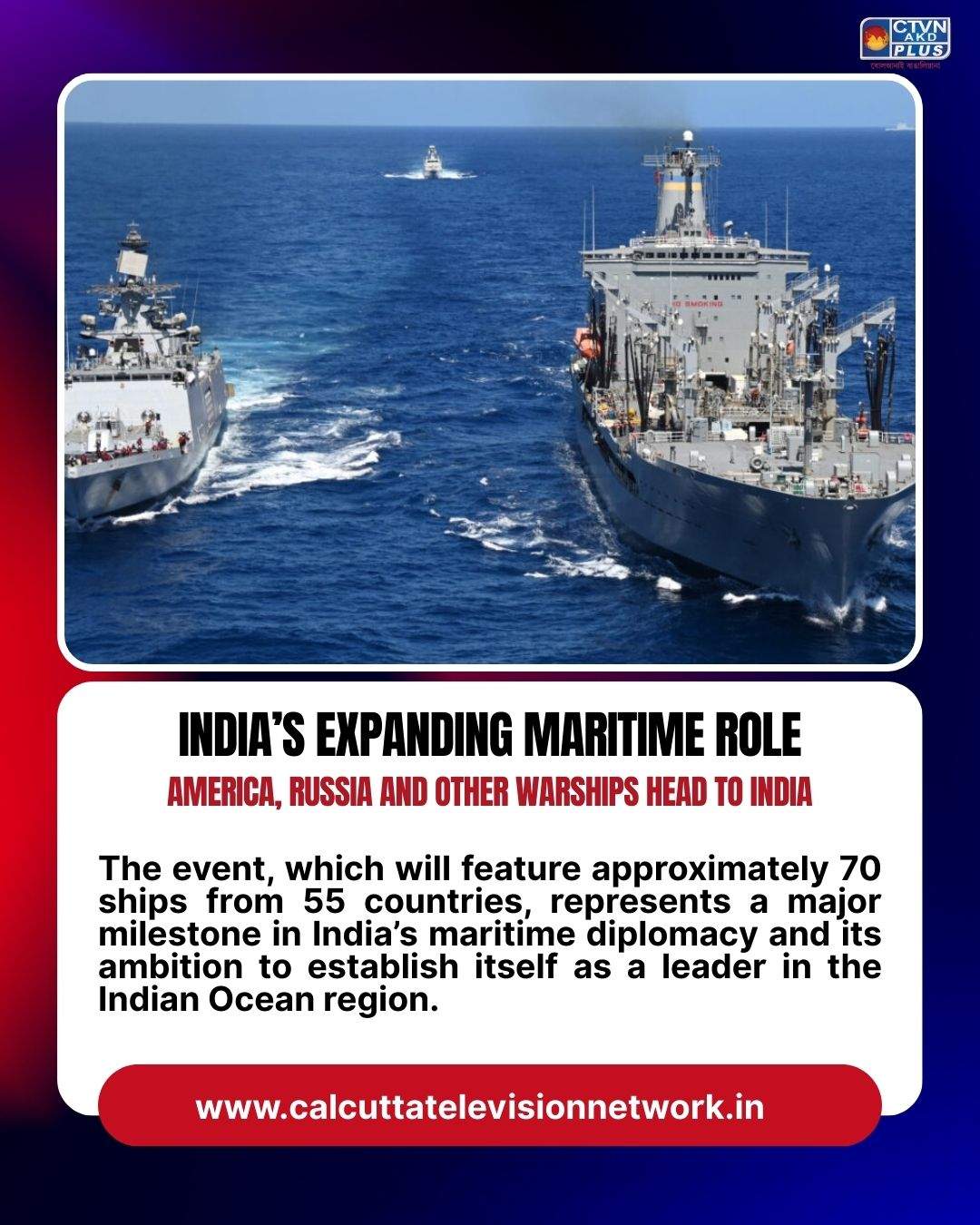
India is preparing to host one of its largest naval exercises to date, MILAN‑26, scheduled for February 2026 off the coast of Visakhapatnam. The event, which will feature approximately 70 ships from 55 countries, represents a major milestone in India’s maritime diplomacy and its ambition to establish itself as a leader in the Indian Ocean region.
MILAN‑26 is part of India’s broader MAHASAGAR vision—Mutual and Holistic Advancement for Security and Growth Across Regions—an expansion of Prime Minister Narendra Modi’s earlier “Security and Growth for All in the Region” initiative. The programme emphasizes safeguarding sea lanes, building trust among nations, and collectively protecting maritime interests. Hosting the International Fleet Review for the third time, after 2001 and 2016, underscores India’s growing stature as a hub for naval collaboration.
The participation of major powers, including the United States, Russia, and all QUAD members (India, Japan, Australia, and the US), highlights the exercise’s geopolitical weight. For India, this convergence of navies demonstrates its ability to convene diverse partners despite global tensions. It also reflects New Delhi’s active strategy under its Act East Policy, strengthening ties with both regional and global stakeholders.
Beyond symbolism, MILAN‑26 has practical implications. The exercise will showcase interoperability, maritime security coordination, and readiness against threats ranging from piracy to potential state conflict. For India, it is an opportunity to project naval capability, reinforce strategic partnerships, and signal its commitment to a free and secure Indo‑Pacific.
Since its inception in 1995 with just three participants—Indonesia, Singapore, and Thailand—MILAN has grown steadily. By 2014, 17 navies joined, and MILAN‑2022 saw 42 countries participate. The expansion to 55 nations in 2026 illustrates India’s rising influence in maritime affairs and its central role in shaping the future of Indo‑Pacific security.