Safeguarding Farmers in the India–US Trade Deal
Union Commerce Minister Piyush Goyal has strongly defended the recent India–US trade agreement, emphasizing that the interests of Indian farmers remain fully protected. According to Goyal, Prime Minister Narendra Modi’s government has consistently prioritized farmer welfare, ensuring that agricultural prosperity is central to policy decisions.
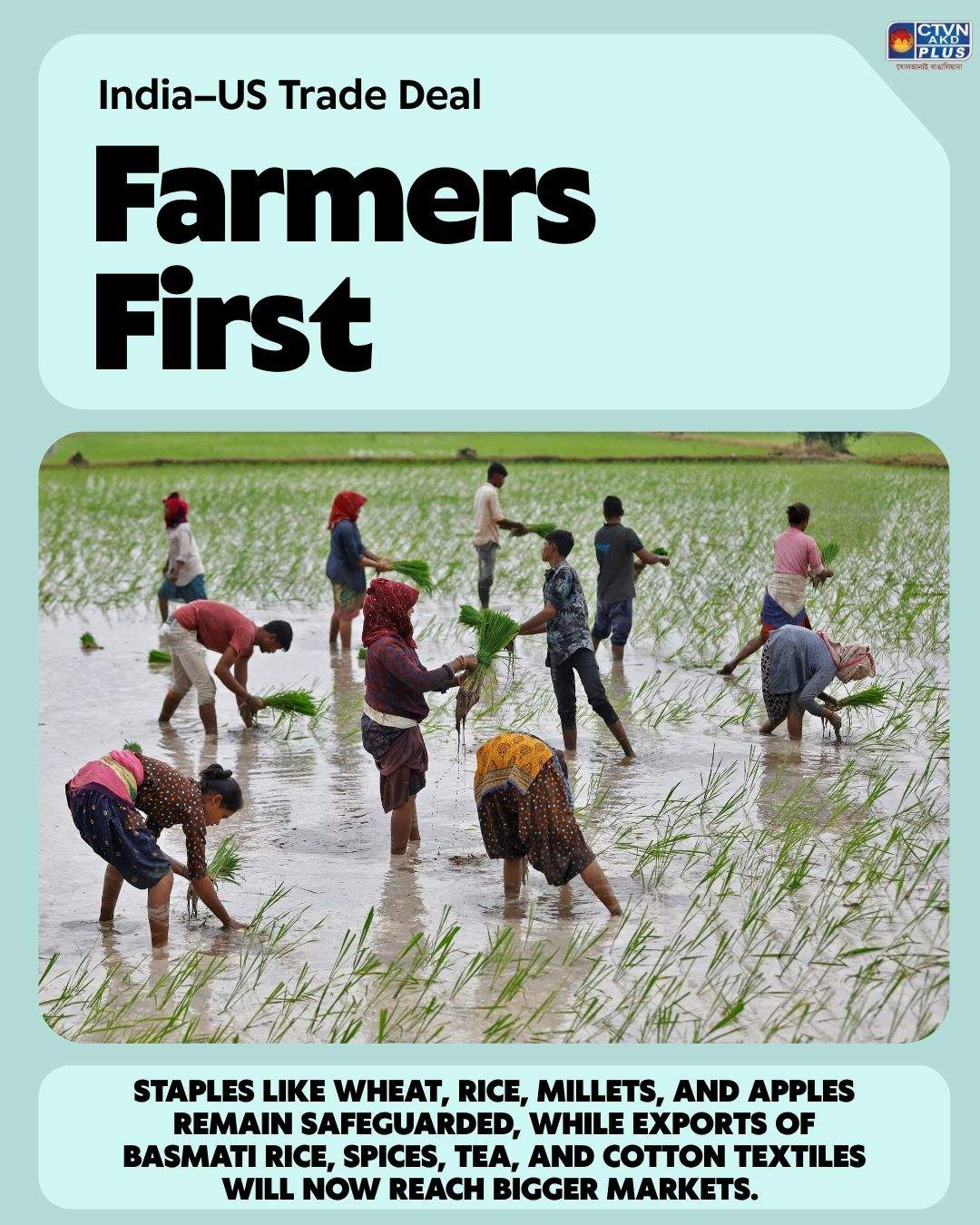
The minister clarified that staple crops such as wheat, rice, millets, soybean, corn, and potatoes have been safeguarded under the deal. Importantly, India has not opened its markets to dairy or poultry products, a move that shields domestic producers from external competition. At the same time, the agreement creates new opportunities for Indian exports. Products like basmati rice, fruits, spices, tea, and marine goods are expected to gain access to wider international markets, boosting farmers’ incomes.
Goyal highlighted that apple growers and other fruit producers remain protected, while cotton farmers stand to benefit significantly. With expanded markets for cotton textiles, demand for raw cotton is projected to rise, creating a direct advantage for cultivators. This balance between protection and opportunity reflects the government’s dual approach: safeguarding sensitive sectors while opening pathways for growth.
Beyond immediate trade benefits, the deal signals India’s commitment to strengthening its global economic partnerships without compromising domestic priorities. By ensuring that farmers are not disadvantaged, the government aims to build confidence among rural communities while simultaneously expanding India’s export footprint.
The India–US trade agreement, as presented by Goyal, thus represents a careful negotiation—one that protects the backbone of India’s economy while positioning its agricultural products for greater global reach.