India’s Gaganyaan Mission Is Closer Than Ever to Making History
India stands on the threshold of a historic achievement as its first human spaceflight programme, Gaganyaan, nears completion. The Indian Space Research Organisation (ISRO) has confirmed that nearly 90% of the development work is finished, signaling that the nation is closer than ever to sending its astronauts into space. This milestone reflects decades of scientific perseverance, technological innovation, and national ambition.
At the heart of the mission are critical systems designed with precision and care. The human-rated launch vehicle, capable of safely carrying astronauts beyond Earth’s atmosphere, has undergone rigorous testing. The crew module, engineered to withstand the harsh conditions of space, is steadily advancing toward readiness. Equally vital are the astronaut safety technologies, which ensure that every aspect of the mission prioritizes human life and reliability. These components together embody India’s commitment to excellence in space exploration.
Before the crewed launch, ISRO will conduct multiple uncrewed test missions to validate safety and performance. These trials are essential to guarantee mission success and to build confidence in India’s ability to protect its astronauts. The first crewed Gaganyaan mission is currently targeted for 2027, a date that promises to mark a defining chapter in India’s scientific journey.
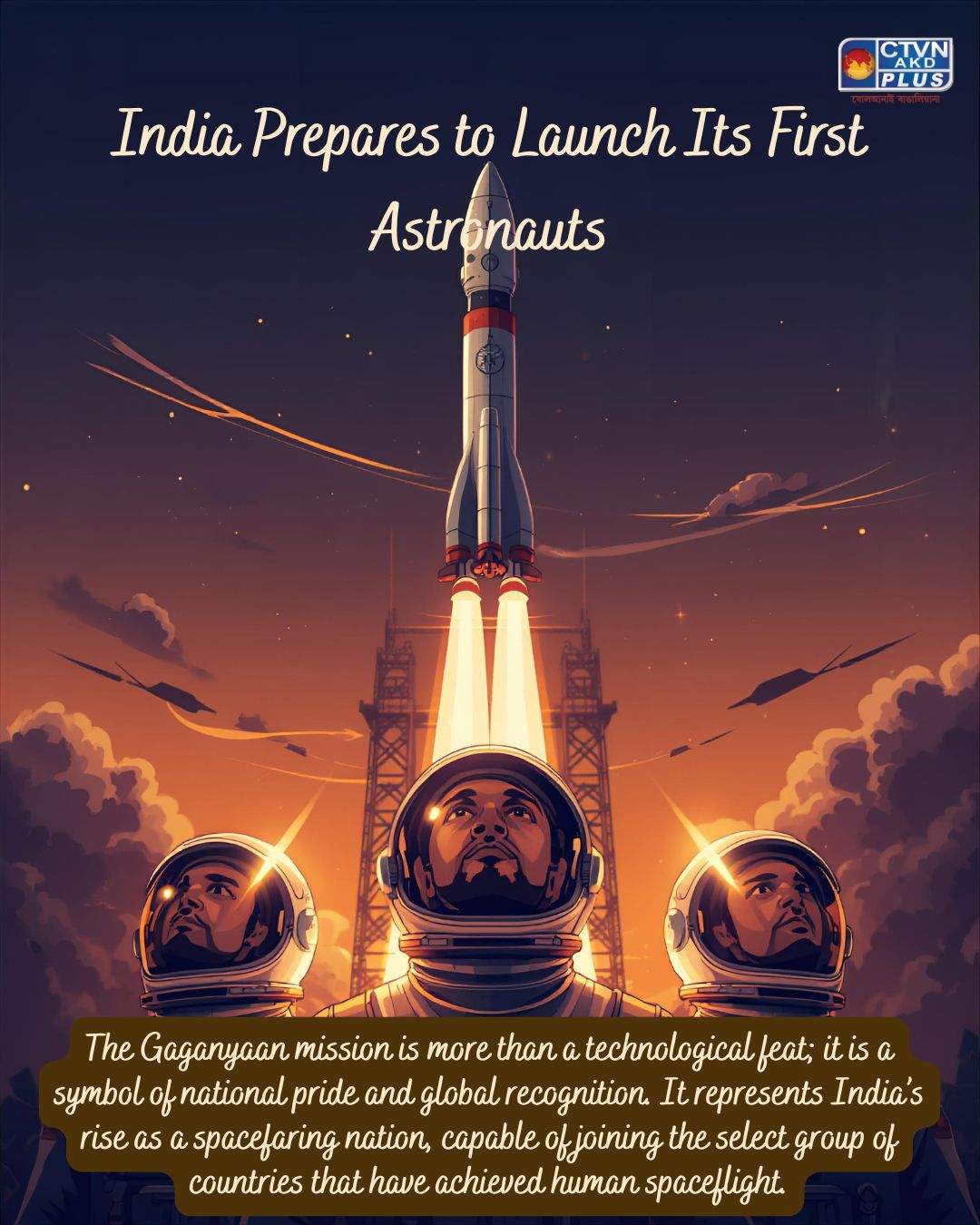
The Gaganyaan mission is more than a technological feat; it is a symbol of national pride and global recognition. It represents India’s rise as a spacefaring nation, capable of joining the select group of countries that have achieved human spaceflight. For the youth of India, it is an inspiration—proof that dreams can transcend boundaries and reach the stars. For the world, it is a reminder that innovation thrives when nations invest in science and technology.
India is rising—beyond Earth, toward a future where its flag will wave proudly in the vast expanse of space.