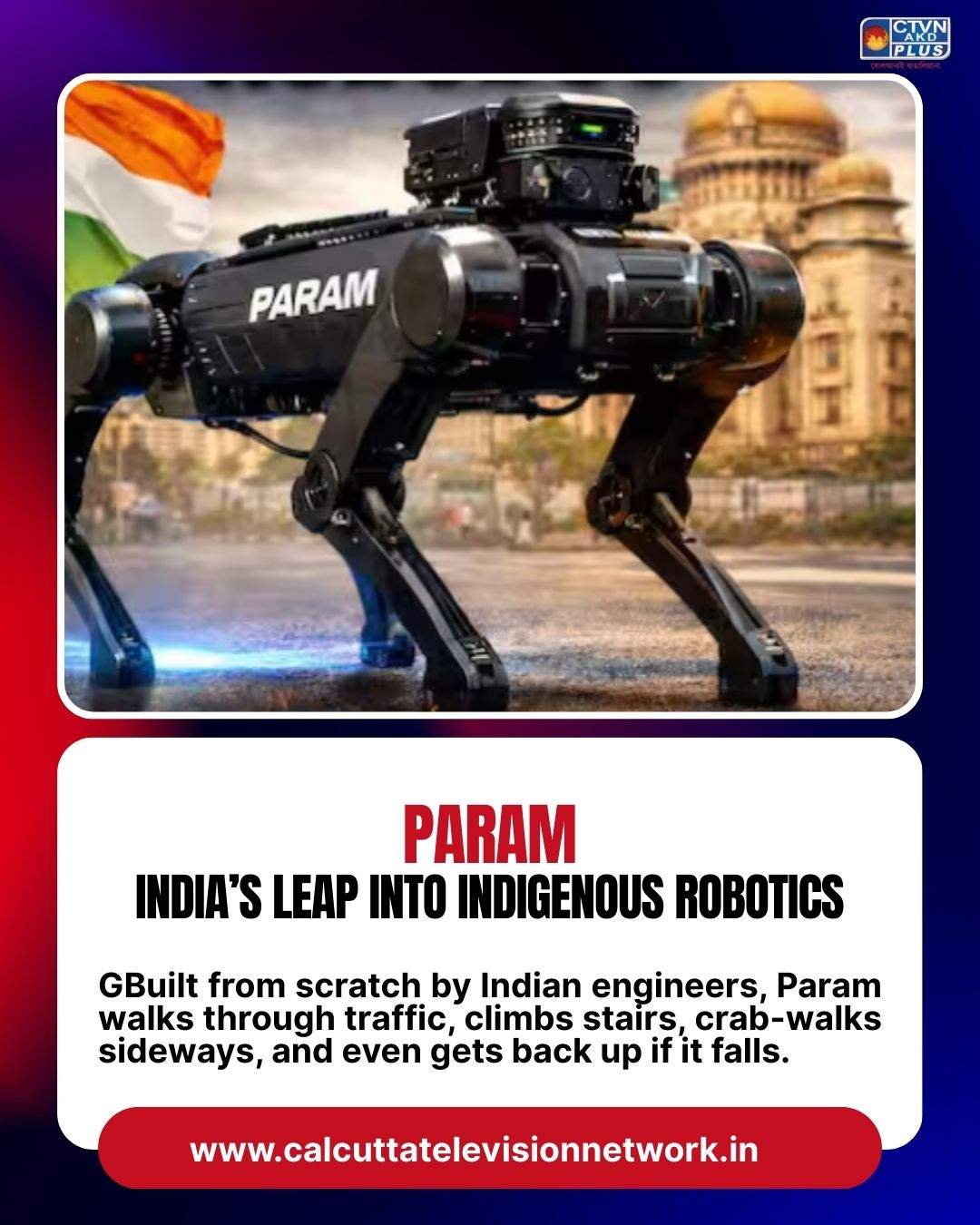
Param: India’s Leap into Indigenous Robotics
India’s growing ambition in artificial intelligence and robotics took a bold step forward at the India AI Impact Expo 2026 in Delhi, where Bengaluru-based start-up General Autonomy unveiled its quadruped robot, *Param*. Marketed as “India’s most powerful indigenous robot dog,” Param has captured public imagination and sparked conversations about the nation’s place in global robotics innovation.
Unlike many projects that rely on imported components, Param was designed and built entirely in India by Indian engineers. This emphasis on indigenous development reflects a broader national push for technological self-reliance. The robot’s capabilities are impressive: it can navigate busy traffic, detect and avoid obstacles, climb stairs up to 30 centimeters, and even crab-walk sideways to maneuver through tight spaces. It is also capable of autonomous movement, target following, and self-recovery after falls—features that place it in direct competition with advanced quadrupeds showcased internationally, such as China’s Orion.
The project, developed over seven months, builds on the team’s earlier experience with humanoid robotics. Continuous upgrades every two weeks suggest a rapid innovation cycle, positioning Param as a dynamic platform rather than a static prototype. Its presentation to Prime Minister Narendra Modi during the Startup India anniversary further highlights the government’s interest in nurturing indigenous robotics.
Quadruped robots have wide-ranging applications: from industrial inspections and rescue missions in hazardous environments to defence support and scientific research. By demonstrating that India can produce such technology domestically, Param signals a new era of confidence and competitiveness in the global robotics landscape.
Ultimately, Param is more than a machine—it is a symbol of India’s determination to innovate, compete, and lead in the century of AI. As the world watches, India’s robotic dog may well become a trailblazer for indigenous technology on the global stage.