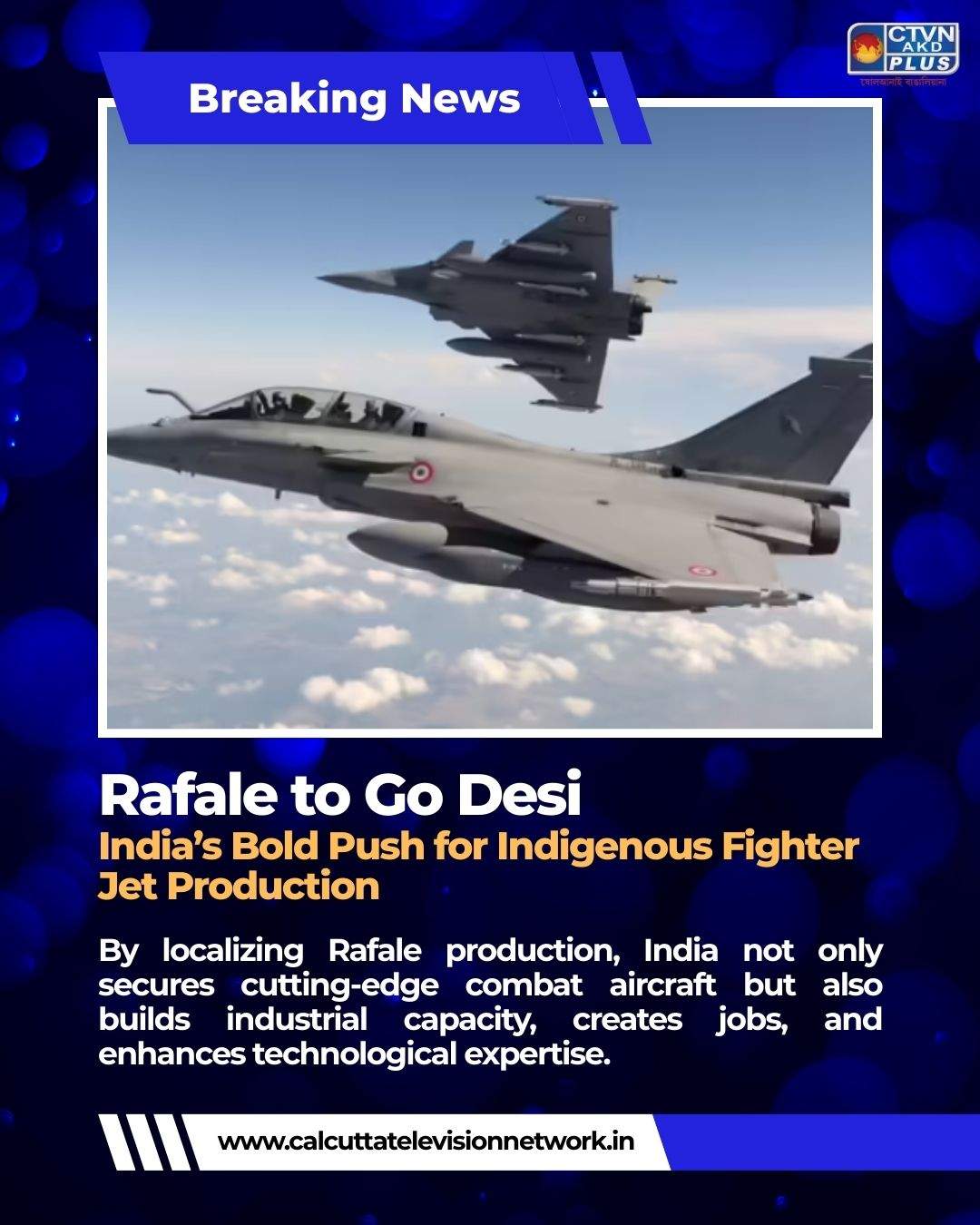
Rafale to Go Desi: India’s Bold Push for Indigenous Fighter Jet Production
India’s defence modernization is set to take a decisive leap with plans to acquire 114 Rafale fighter jets, of which nearly 80% will be manufactured domestically. This ambitious move reflects New Delhi’s determination to strengthen its air power while advancing the vision of Atmanirbhar Bharat—self-reliance in defence production.
The deal, currently under negotiation with France’s Dassault Aviation, goes beyond mere procurement. It includes proposals to shift parts of the manufacturing process to India and establish a Maintenance, Repair and Overhaul (MRO) facility within the country. Such steps would not only ensure higher serviceability of the fleet but also position India as a regional hub for Rafale support, potentially catering to export orders and servicing aircraft operated by other nations.
Cost negotiations remain ongoing, with the French side factoring in inflation at around 4% annually. Yet, the Rafale’s proven 90% serviceability rate—far superior to rivals like the American F‑35—makes it the most reliable option for the Indian Air Force (IAF). For a force grappling with depleting squadron strength and delays in indigenous projects such as the LCA Mark 1A, the Rafale deal offers a timely solution.
Strategically, the acquisition comes at a critical juncture. India faces persistent challenges on two active fronts—Pakistan and China—while Bangladesh’s growing military capabilities add a new dimension to regional security. The IAF’s future force structure will rely on a mix of Su‑30 MKIs, Rafales, and indigenous fighters, including a fifth‑generation jet expected beyond 2035.
By localizing Rafale production, India not only secures cutting-edge combat aircraft but also builds industrial capacity, creates jobs, and enhances technological expertise. The project symbolizes a shift from dependency to leadership, ensuring that India’s skies remain secure while its defence industry takes flight.


