SENSEX and NIFTY nears Record Highs on India-US Trade Deal
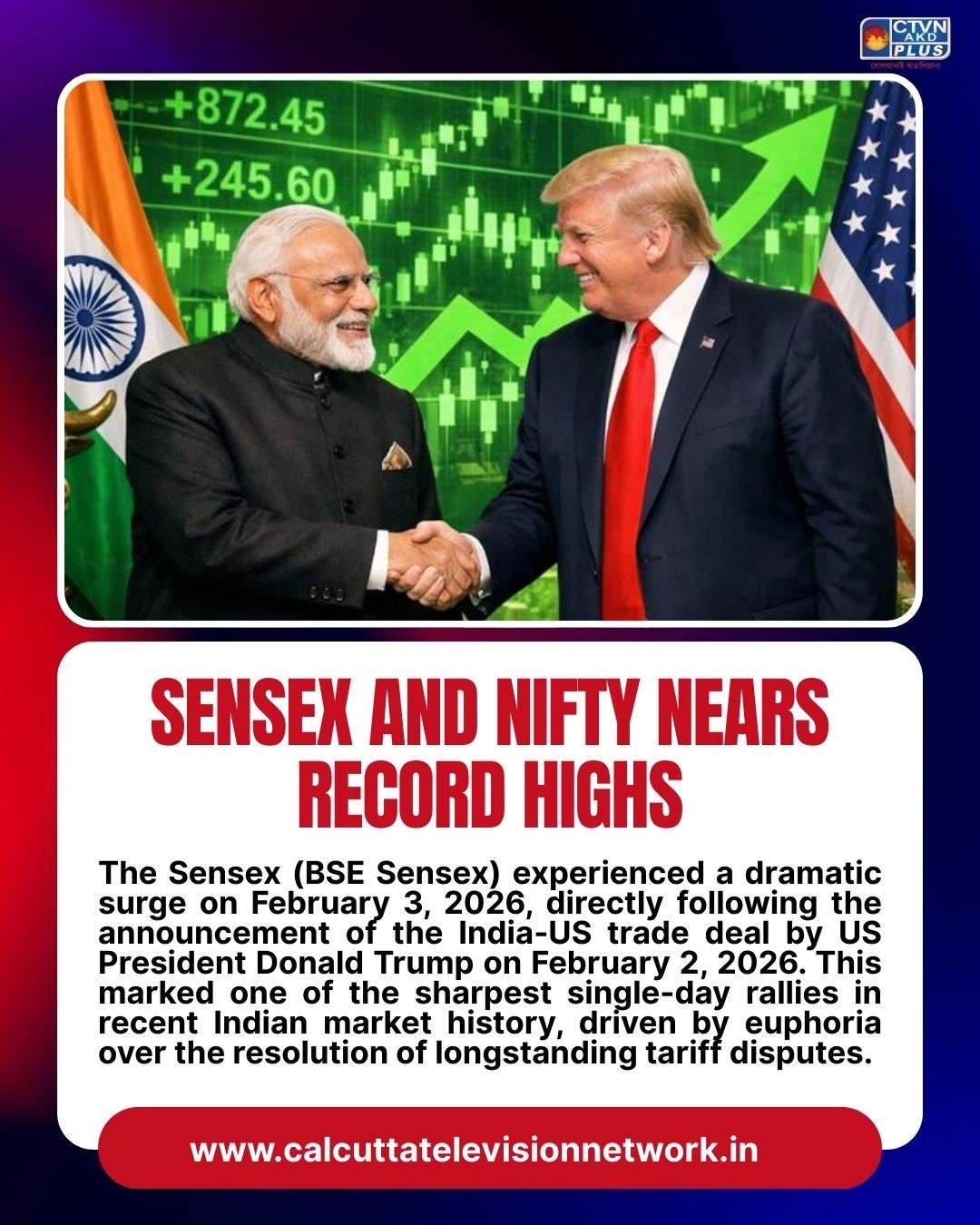
The Sensex (BSE Sensex) experienced a dramatic surge on February 3, 2026, directly following the announcement of the India-US trade deal by US President Donald Trump on February 2, 2026. This marked one of the sharpest single-day rallies in recent Indian market history, driven by euphoria over the resolution of longstanding tariff disputes.
Market Performance on February 3, 2026
Indian equity benchmarks opened with explosive gains in morning trade, reflecting immediate investor relief and optimism:
- The BSE Sensex opened sharply higher, surging over 3,600 points at one point to cross the 85,000 mark (from Monday's close around 81,666). Early reports captured jumps of 2,300–2,400 points shortly after opening, with peaks reaching up to 4,200+ points (over 5%) intraday before some consolidation.
- The NSE Nifty 50 mirrored this momentum, climbing as much as 1,200–1,250 points (around 5%) to trade above 26,300 at open, nearing record highs before paring some gains to hover around 25,800–26,000 levels in mid-morning trade.
By mid-morning (around 9–11 AM IST), gains moderated but remained robust:
- Sensex: Up approximately 2,200–3,600 points (2.7–5% range).
- Nifty 50: Up 650–1,200 points (2.5–5%).
This rally erased much of the recent weakness, including pressures from the Union Budget and prior tariff overhangs. The rupee also strengthened significantly (up over 1%, around 119 paise at points), hitting levels like 90.30–90.46 against the USD.
Key Drivers of the Surge
The primary catalyst was the trade deal itself, which removed a major uncertainty:
- US tariffs on Indian goods dropped from punitive levels (up to 50%, including 25% reciprocal + 25% linked to Russian oil purchases) to 18%, effective immediately.
- This directly benefits export-oriented sectors like textiles, leather, pharmaceuticals, gems & jewelry, and IT services, boosting competitiveness against global peers.
- Analysts described it as a "game changer," projecting higher GDP growth (potentially 7.5% in FY27), accelerated corporate earnings (16–18%), stronger rupee, and renewed foreign inflows after months of outflows.
Export-linked and large-cap stocks (e.g., Reliance, Adani group firms, and others in manufacturing/export themes) led the charge, with broad-based buying across indices.
Broader Context and Implications
The surge represents a classic "relief rally" after prolonged uncertainty from tariff threats, which had weighed on sentiment and contributed to foreign portfolio investor selling. Combined with the recent India-EU trade progress and a growth-focused domestic environment, it has reignited "animal spirits" in the market.
While some gains pared as the day progressed (typical after gap-ups), the move underscores strong investor confidence in improved bilateral ties, enhanced export prospects, and supply-chain diversification benefits for India. Sectors sensitive to US market access saw the biggest pops, signaling expectations of sustained tailwinds.
As trading continues, the rally highlights how geopolitical and trade resolutions can swiftly translate into market momentum.