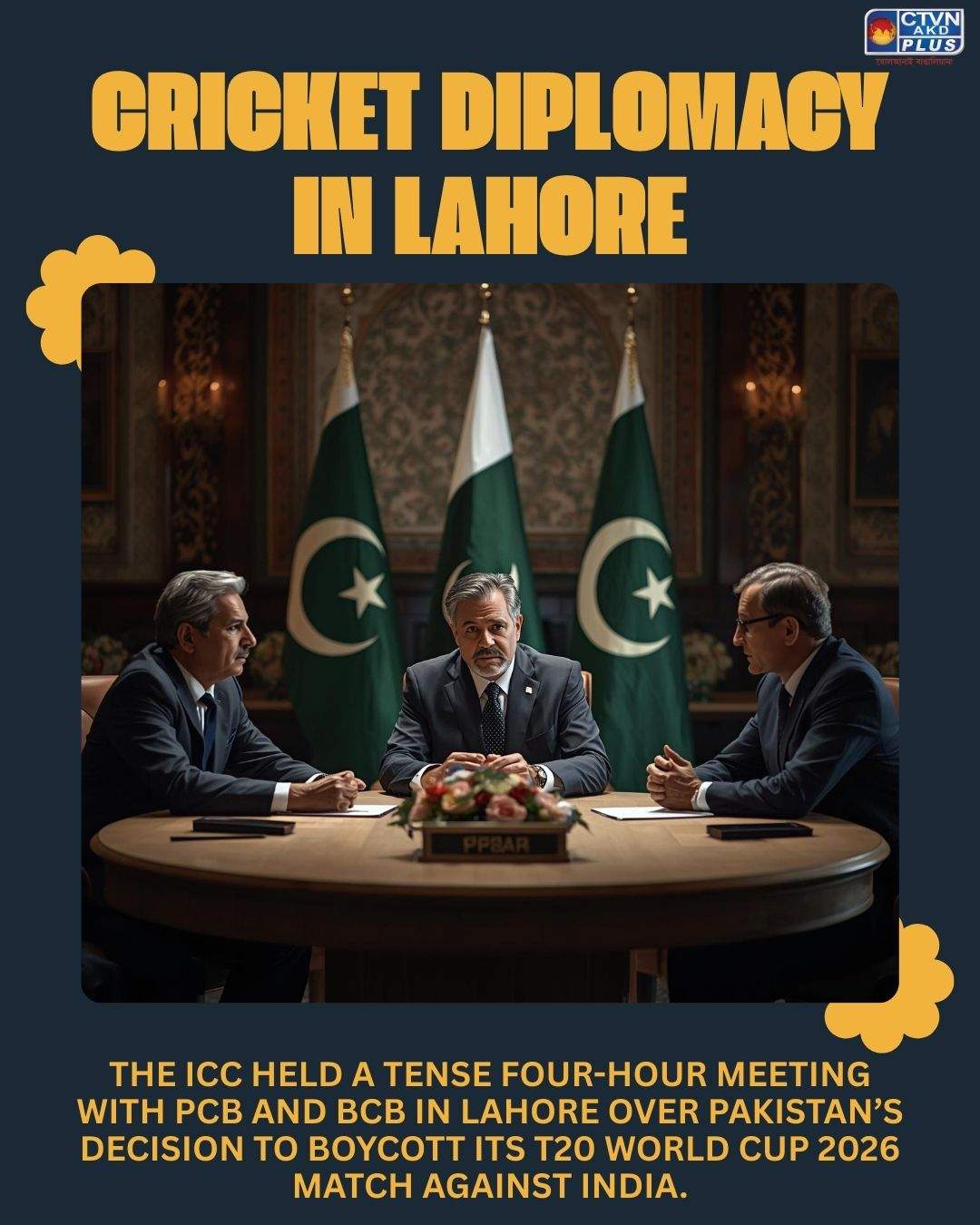
Cricket Diplomacy on the Edge: ICC, PCB, and BCB in Lahore Talks
The International Cricket Council (ICC) convened a closed-door meeting with the Pakistan Cricket Board (PCB) and the Bangladesh Cricket Board (BCB) at Lahore’s Gaddafi Stadium on Sunday, amid escalating tensions over Pakistan’s decision to boycott its ICC Men’s T20 World Cup 2026 clash against India. Scheduled for February 15 in Colombo, the fixture is one of the tournament’s marquee matches, yet Pakistan’s withdrawal has triggered serious governance and commercial concerns.
The four-hour meeting ended without a joint statement, reflecting the sensitivity of the issue. PCB sources indicated that any formal announcement would require prior approval from the Pakistan government, underscoring the political dimensions of the dispute. The ICC reportedly pressed the PCB to clarify its invocation of ‘Force Majeure’ under the Members Participation Agreement (MPA), questioning whether government directives alone suffice as justification.
The ICC outlined strict evidentiary standards for non-participation, warning of potential financial and reputational losses if the high-profile match is cancelled. While the global body emphasized its preference for avoiding confrontation, its constitution allows suspension or termination of membership in cases of serious breaches—a reminder of the stakes involved.
The PCB, however, believes it has a defensible position. It draws parallels with its earlier dispute against the Board of Control for Cricket in India (BCCI), when India’s government refused permission for bilateral series despite a 2014 Memorandum of Understanding. Although Pakistan lost its damages claim in that case, it argues that the precedent strengthens its current stance.
This standoff highlights the fragile intersection of cricket, politics, and commerce. With the World Cup fixture days away, the outcome of these deliberations will shape not only the tournament’s narrative but also the future of cricket diplomacy in South Asia.