India US Trade Deal: 'Father of all Deals'
The India-US trade deal, particularly the recent breakthrough announced on 2nd February 2026, represents a pivotal moment in bilateral economic relations between the world's two largest democracies. This agreement addresses longstanding tensions over tariffs, market access, and geopolitical considerations, while laying the foundation for deeper integration.
Historical Context
India and the United States have maintained a robust strategic partnership for decades, encompassing defense, technology, and countering regional challenges. However, trade has often been a friction point. Negotiations for a comprehensive Bilateral Trade Agreement (BTA) began intensifying in early 2025, with leaders committing in February 2025 to work toward a multi-sector deal. Progress was slow amid differing priorities: the US sought greater market access for its agricultural products, energy, and manufactured goods, while India emphasized protecting domestic industries, farmers, and sensitive sectors like dairy and agriculture.
Tensions escalated in mid-2025 when the US imposed high tariffs—up to 50% on certain Indian goods, including a 25% reciprocal tariff and an additional punitive levy tied to India's continued purchases of Russian oil amid global energy dynamics. This was one of the steepest rates applied to any trading partner, impacting Indian exports in sectors like textiles, pharmaceuticals, gems, and leather. India responded by exploring alternative markets and accelerating deals elsewhere (such as with the EU), but both sides continued behind-the-scenes talks.
The Breakthrough in 2026
On February 2, 2026, following a phone conversation between US President Donald Trump and Indian Prime Minister Narendra Modi, Trump announced the trade deal on his social media platform. The agreement, described as effective immediately, includes:
- Reduction of US tariffs on Indian goods from 25% (reciprocal) to *18%*, with the additional 25% punitive tariff (linked to Russian oil purchases) being dropped.
- India's commitments to reduce tariffs and non-tariff barriers on US goods (potentially to zero in certain areas), increase purchases of American products (including energy, agriculture, and technology), and shift away from Russian oil imports toward sources like the US and possibly Venezuela.
- Trump's claims of India agreeing to buy over $500 billion in US goods, though details remain limited and some aspects (like a complete halt on Russian oil) have been questioned by analysts as potentially aspirational or phased.
Indian officials, including Commerce Minister Piyush Goyal and External Affairs Minister S. Jaishankar, hailed it as a "historic" and "landmark" step that supports "Make in India," boosts exports, and unlocks opportunities for farmers, MSMEs, and skilled workers. PM Modi expressed delight that "Made in India" products would face lower tariffs, emphasizing mutual growth.
This appears to be an initial or "mini" tranche of a broader BTA, with more comprehensive negotiations ongoing for deeper concessions in agriculture, automobiles, and other sectors.
Economic Implications
The deal provides immediate relief to Indian exporters hit by high tariffs, potentially boosting competitiveness against rivals like China, Vietnam, and Bangladesh. Sectors such as textiles, leather, pharmaceuticals, and IT stand to gain significantly. Indian markets reacted positively, with the Nifty 50 surging around 5% on opening the following day, and the rupee strengthening.
For the US, it opens greater access to India's vast market, particularly for farm products (e.g., tree nuts, soybean oil, cotton), energy, and manufactured goods, while aligning with efforts to diversify supply chains away from certain dependencies. Bilateral trade, already substantial, could see accelerated growth, with mutual benefits in innovation, investment, and job creation.
However, challenges remain. Some US claims (e.g., full cessation of Russian oil purchases) may be difficult for India given energy security needs, and analysts like Moody's suggest partial shifts rather than total halts. Domestic political reactions in India vary, with the ruling coalition celebrating it as a win and opposition parties questioning details and alleging concessions.
Broader Significance
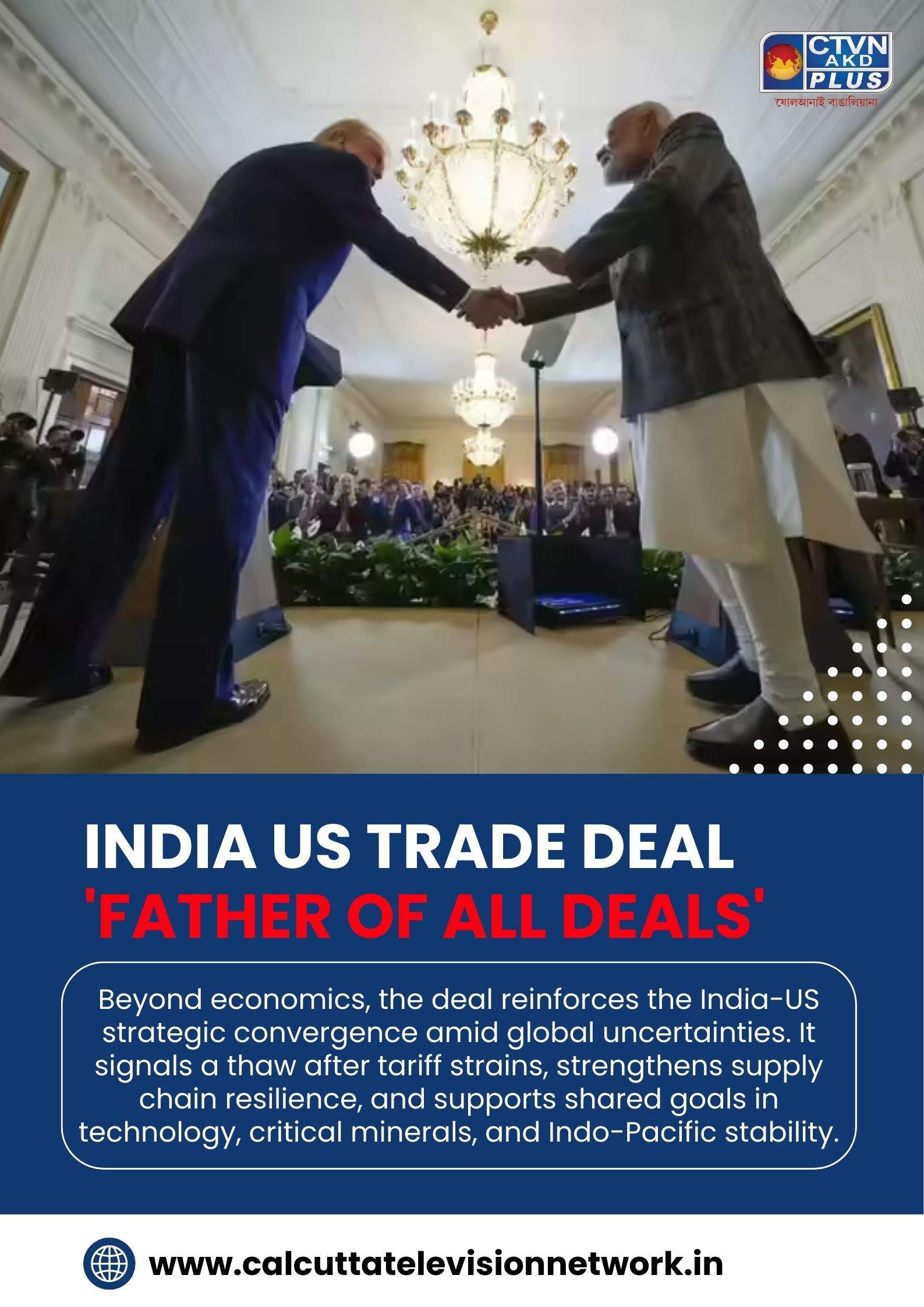
Beyond economics, the deal reinforces the India-US strategic convergence amid global uncertainties. It signals a thaw after tariff strains, strengthens supply chain resilience, and supports shared goals in technology, critical minerals, and Indo-Pacific stability.
In summary, the 2026 India-US trade deal marks a pragmatic compromise that resolves immediate tariff pain while setting the stage for a more ambitious partnership. As details unfold and implementation progresses, it could redefine bilateral ties, fostering shared prosperity in an interconnected world. The agreement underscores that even amid differences, dialogue and mutual respect can yield meaningful outcomes for both nations.