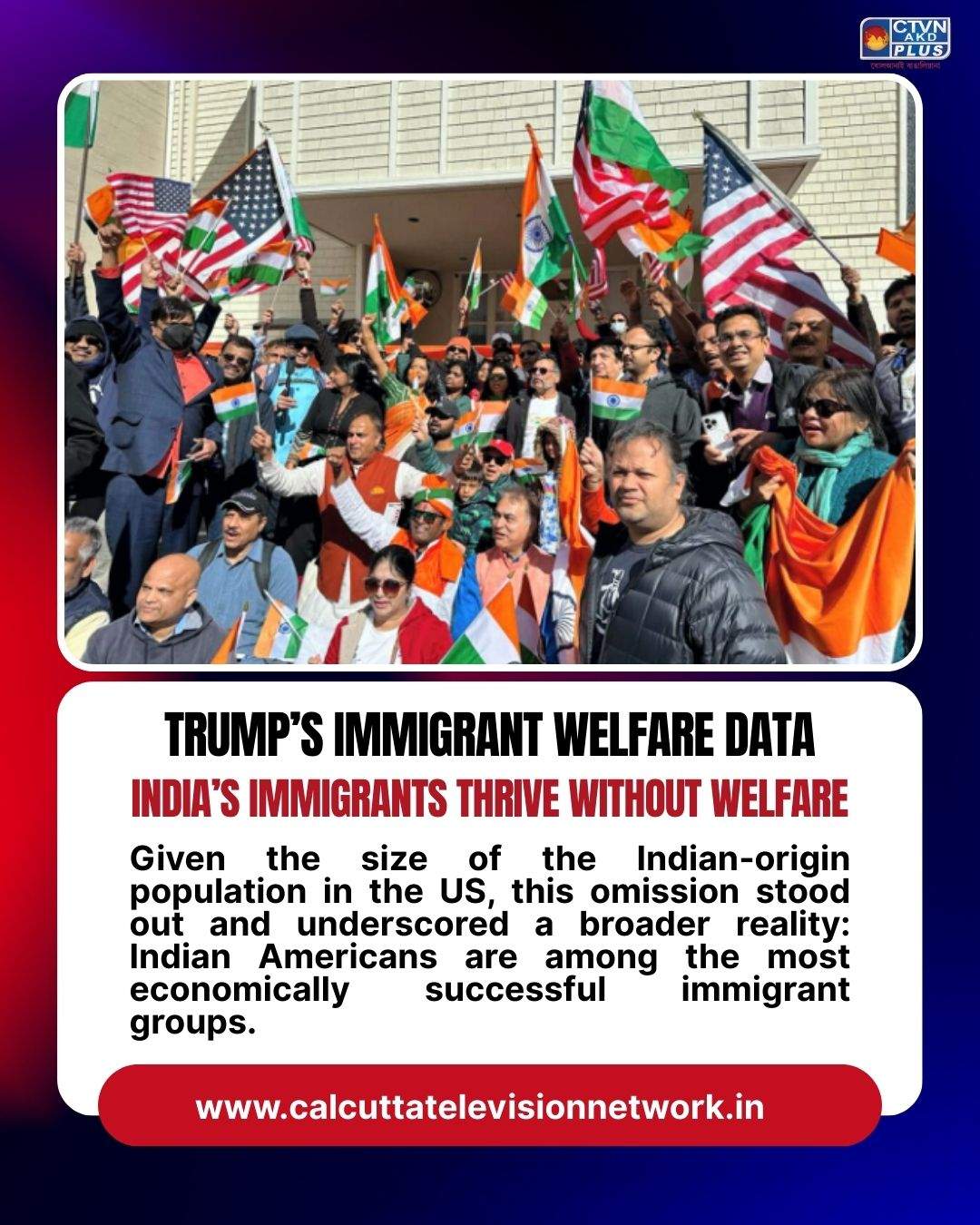
Trump’s Immigrant Welfare Data and India’s Absence
US President Donald Trump’s release of immigrant welfare data has reignited debate over immigration, economic contribution, and public assistance in the United States. The chart, posted on Truth Social, highlighted welfare usage among immigrant households from nearly 120 countries. It revealed striking disparities, with Bhutan topping the list at 81.4 percent of households receiving assistance, while countries such as Bermuda, Saudi Arabia, and Korea hovered near the lower end at 25–27 percent.
Among South Asian nations, Bangladesh, Pakistan, and Nepal featured prominently, with welfare participation rates ranging from 34 to 55 percent. India, however, was conspicuously absent. Given the size of the Indian‑origin population in the US, this omission stood out and underscored a broader reality: Indian Americans are among the most economically successful immigrant groups.
Research from the Pew Center shows Indian‑headed households reporting median annual incomes of USD 151,200, far above the Asian‑origin median of USD 105,600. Immigrant‑headed Indian households earn even more, at USD 156,000, compared with USD 120,200 for US‑born Indian households. On an individual level, Indian Americans aged 16 and above earn a median of USD 85,300, significantly higher than the Asian median of USD 52,400.
Experts attribute this financial strength to selective immigration pathways such as H‑1B visas, which attract highly educated professionals in technology, medicine, and engineering. These factors have contributed to low reliance on public assistance, likely placing India below the threshold of welfare participation highlighted in Trump’s chart.
While the chart did not clarify its methodology or explain omissions, India’s absence reinforces long‑standing evidence of Indian Americans’ financial self‑sufficiency. In the broader political context, Trump’s focus on welfare dependence among immigrants reflects his strategy of foregrounding economic contribution as a key issue. Yet the Indian case illustrates how selective immigration policies can produce communities with high earnings and minimal reliance on state support.