With Trump’s Capture of Venezuela, India Must Pivot
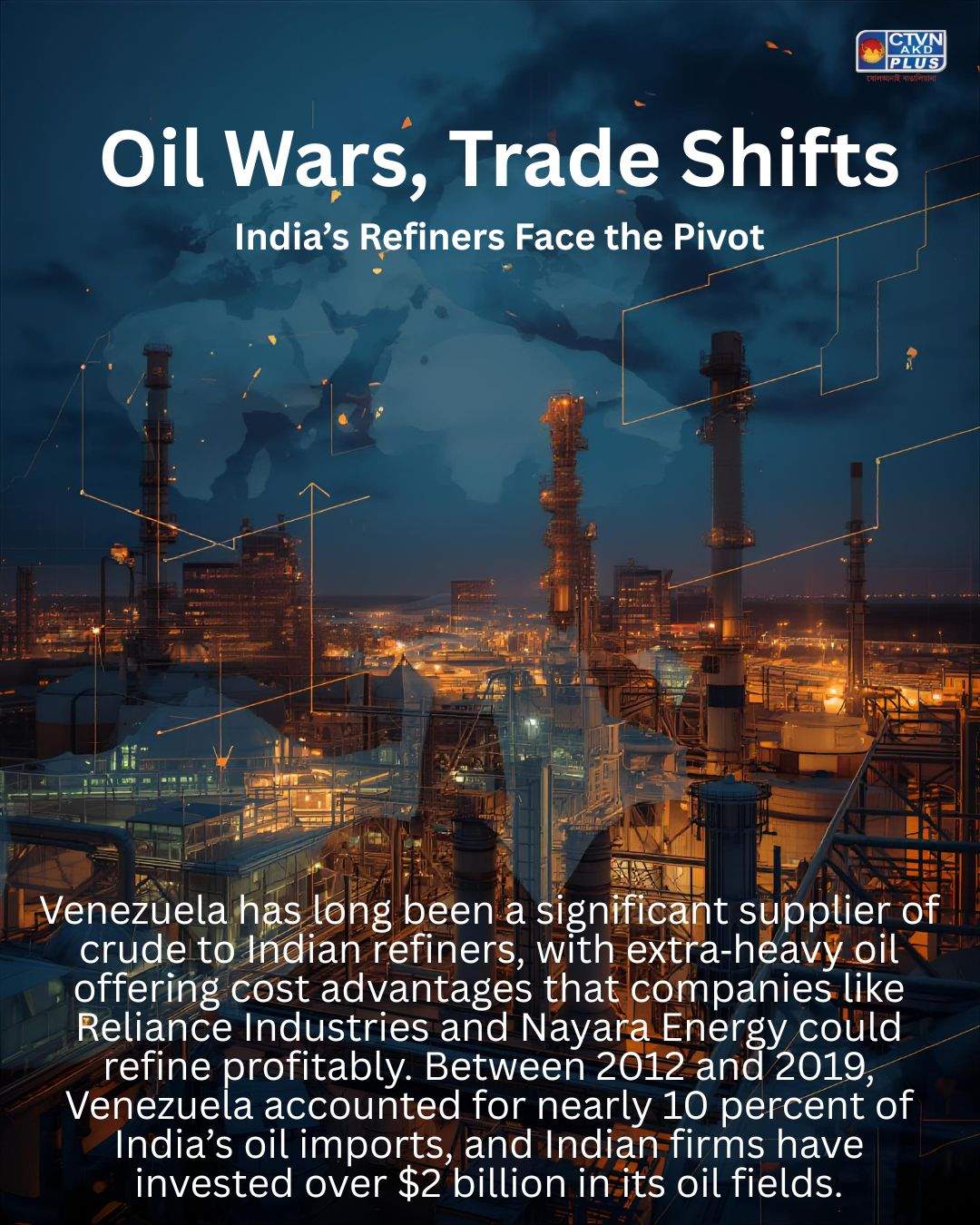
The dramatic U.S. operation in Venezuela, culminating in the capture of President Nicolás Maduro, has immediate consequences for global geopolitics and energy markets. For India, the implications are particularly acute. Venezuela has long been a significant supplier of crude to Indian refiners, with extra‑heavy oil offering cost advantages that companies like Reliance Industries and Nayara Energy could refine profitably. Between 2012 and 2019, Venezuela accounted for nearly 10 percent of India’s oil imports, and Indian firms have invested over $2 billion in its oil fields.
Trump’s strategy, however, signals a recalibration of access. By projecting military power and asserting control over Venezuela’s reserves—the largest in the world—the U.S. is positioning its own companies, such as Chevron, ExxonMobil, and ConocoPhillips, to dominate future production. If Washington succeeds, Indian refiners may find themselves squeezed out of a market they once relied upon, forced to diversify supply chains and renegotiate terms under U.S. influence.
Geopolitically, India faces a delicate balancing act. While not an ally of Maduro, New Delhi benefited from Venezuela’s willingness to trade despite sanctions. Now, with Washington dictating terms, India must weigh its strategic autonomy against the risk of tariff pressure and diplomatic fallout. The pivot will likely involve strengthening ties with Middle Eastern suppliers, expanding imports from Russia despite U.S. objections, and accelerating domestic energy reforms to reduce vulnerability.
The broader concern is precedent. If the U.S. can reshape Venezuela’s oil landscape through force, similar interventions elsewhere could destabilize markets India depends on. For Indian policymakers and oil companies, the lesson is clear: resilience requires diversification, investment in alternative energy, and careful navigation of shifting alliances. Venezuela’s crisis may be far away, but its shockwaves will be felt in India’s refineries, trade negotiations, and foreign policy corridors.