Accountability of Politicians – Lessons from Wales
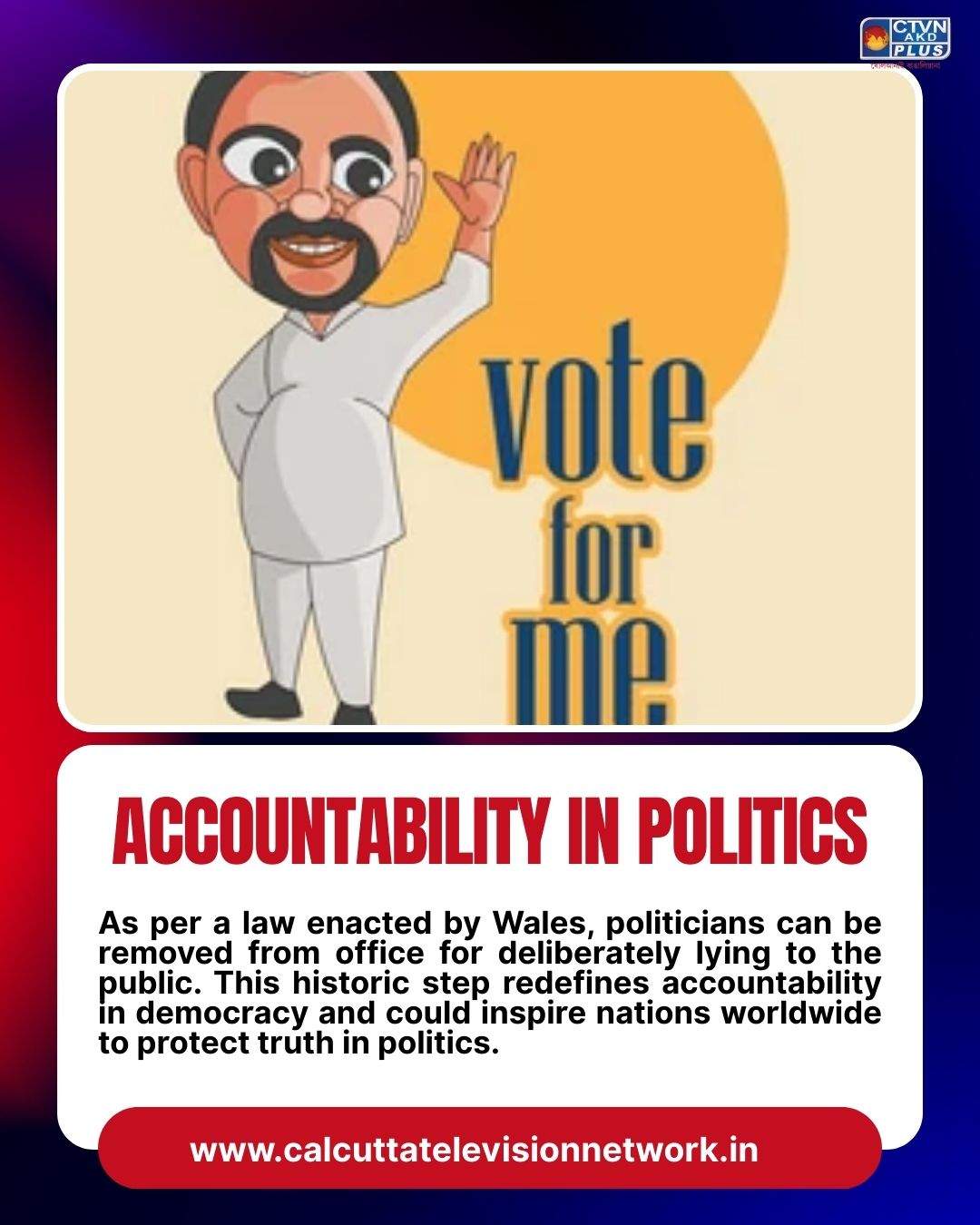
Accountability in politics is the cornerstone of a functioning democracy. Citizens entrust elected representatives with power, expecting honesty, transparency, and responsibility. Yet, deliberate misinformation and falsehoods have often eroded public trust, leaving democracies vulnerable to manipulation. Against this backdrop, Wales has made history by becoming the first country to enforce rules that allow politicians to be removed from office for deliberately lying to the public.
This groundbreaking measure represents a decisive step toward restoring integrity in governance. By legally binding politicians to truthfulness, Wales has set a precedent that challenges the culture of impunity often associated with political deception. It signals that dishonesty is not merely a moral failing but a breach of democratic contract, warranting tangible consequences.
The Welsh action carries symbolic weight beyond its borders. In an era where disinformation spreads rapidly through digital platforms, holding leaders accountable for deliberate lies is essential to safeguarding democratic institutions. It also empowers citizens, reinforcing the principle that political authority is conditional upon honesty. For younger generations, this reform demonstrates that democracy can evolve to meet modern challenges, ensuring that truth remains a non-negotiable value in public life.
However, the path ahead is complex. Determining intent and proving deliberate falsehoods will require robust legal frameworks and impartial oversight. Critics may argue that such rules could be weaponised politically, but the broader principle remains clear: democracy cannot thrive if its leaders are permitted to mislead without consequence.
Wales’s bold move offers a blueprint for other nations. If replicated globally, it could mark the beginning of a new era where accountability is not aspirational but enforceable, and where truth becomes the bedrock of political legitimacy.
#Wales #Democracy #Accountability #TruthInPolitics